Have you ever wondered in what order you should read the Bible? With its diverse collection of books, genres, and themes, deciding how to approach this ancient text can be daunting. However, understanding the different ways you can navigate the Bible can greatly enhance your reading experience and deepen your understanding of its teachings.
In this blog post, we will explore the various methods and orders in which you can read the Bible. Whether you are a seasoned believer or a curious seeker, gaining insights into the best approaches to engage with this sacred text can help you unlock its profound wisdom and timeless truths. Discovering the right order for you can lead to a more enriching and meaningful journey through the pages of the Bible.
Discover the optimal sequence for reading the Bible and deepen your understanding of its profound teachings.
In What Order Should You Read the Bible
When it comes to reading the Bible, one of the questions that often arises is the order in which one should read its books. The Bible is divided into two main sections – the Old Testament and the New Testament, each comprised of multiple books written by various authors over centuries. Deciding on the best order to read these books can depend on a variety of factors, including personal preferences, religious beliefs, and desired outcomes.
One popular approach is to start with the Gospels in the New Testament, which tell the story of Jesus’ life, teachings, death, and resurrection. The Gospels include Matthew, Mark, Luke, and John, and are considered foundational to understanding the Christian faith. After the Gospels, one may choose to continue with the rest of the New Testament, which includes the Acts of the Apostles, the Epistles (or letters), and the Book of Revelation.
Another common approach is to then move on to the Old Testament, which provides the historical and theological foundation for the Christian faith. The Old Testament includes books such as Genesis, Exodus, Psalms, Proverbs, and Isaiah, among many others. Some readers prefer to follow a chronological order when reading the Old Testament, while others may choose to group the books thematically or by author.
Ultimately, there is no right or wrong way to read the Bible, as each person’s journey is unique. Some may prefer to read the Bible from beginning to end, while others may choose to jump around and focus on specific books or themes. Whichever approach you choose, the most important thing is to engage with the text thoughtfully and prayerfully, seeking to understand its message and how it applies to your life.
In conclusion, the order in which you read the Bible is a personal decision that can be influenced by a variety of factors. Whether you choose to start with the Gospels, the Old Testament, or any other book, what matters most is your willingness to engage with the text and allow its message to transform your life.
In what order should I start reading the Bible?
When starting to read the Bible, it’s generally recommended to begin with the following order:
1. The Gospel of John: This book provides a deep and meaningful introduction to the life and teachings of Jesus Christ.
2. The Book of Genesis: This book lays the foundation by explaining the creation of the world and the origins of humanity.
3. The Book of Psalms: Here, you’ll find a collection of songs and poems that express a range of emotions towards God.
4. The Book of Proverbs: Known for its wisdom literature, Proverbs offers practical advice for daily living.
5. The Acts of the Apostles: This book chronicles the early days of the Christian church and the spread of the Gospel.
After reading these foundational books, you can explore the rest of the Bible at your own pace, keeping in mind its overarching themes and message.
What is the correct order of the books of the Bible?
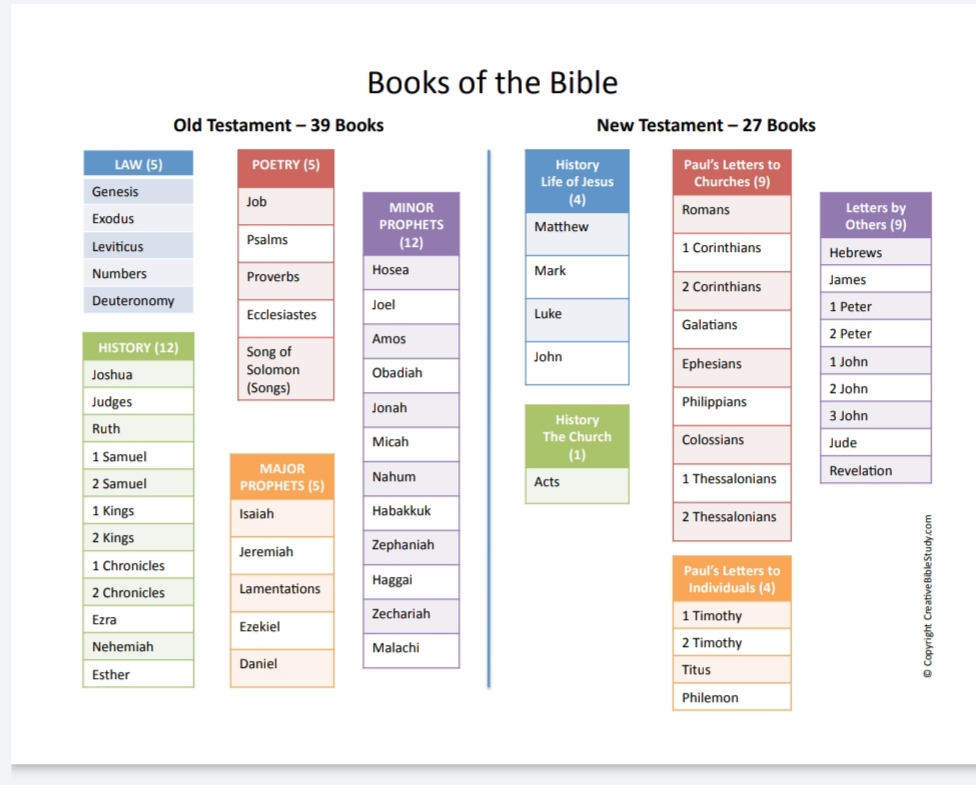
The correct order of the books of the Bible is as follows:
1. Old Testament:
– Pentateuch (Torah): Genesis, Exodus, Leviticus, Numbers, Deuteronomy
– Historical Books: Joshua, Judges, Ruth, 1 Samuel, 2 Samuel, 1 Kings, 2 Kings, 1 Chronicles, 2 Chronicles, Ezra, Nehemiah, Esther
– Poetic Books: Job, Psalms, Proverbs, Ecclesiastes, Song of Solomon
– Major Prophets: Isaiah, Jeremiah, Lamentations, Ezekiel, Daniel
– Minor Prophets: Hosea, Joel, Amos, Obadiah, Jonah, Micah, Nahum, Habakkuk, Zephaniah, Haggai, Zechariah, Malachi
2. New Testament:
– Gospels: Matthew, Mark, Luke, John
– Historical Book: Acts
– Pauline Epistles: Romans, 1 Corinthians, 2 Corinthians, Galatians, Ephesians, Philippians, Colossians, 1 Thessalonians, 2 Thessalonians, 1 Timothy, 2 Timothy, Titus, Philemon
– General Epistles: Hebrews, James, 1 Peter, 2 Peter, 1 John, 2 John, 3 John, Jude
– Apocalyptic Book: Revelation
This is the standard order of the books in the Bible, though variations exist in different translations and denominations.
What is the correct way to read the Bible?
The correct way to read the Bible is to approach it with openness, humility, and reverence. Here are some important tips for reading the Bible effectively:
1. Pray for guidance: Before you start reading, ask the Holy Spirit to illuminate the words of Scripture and help you understand its message.
2. Read regularly: Set aside time each day to read the Bible, even if it’s just a few verses. Consistent reading will help you develop a deeper understanding of the text.
3. Study the context: Consider the historical and cultural background of the passage you are reading to gain a better understanding of its meaning.
4. Meditate on the text: Reflect on the words of Scripture and consider how they apply to your life. Ask yourself what God might be trying to teach you through the passage.
5. Seek guidance: If you come across a passage that is difficult to understand, consult commentaries or seek advice from theologians to gain insight.
6. Apply the teachings: The Bible is not just meant to be read, but also to be applied in your life. Look for ways to live out the principles and teachings found in Scripture.
By approaching the Bible in this manner, you can deepen your relationship with God and grow in your faith.
What books of the Bible should I read first?
If you are new to reading the Bible, a good place to start is with the Gospels. These are the first four books of the New Testament: Matthew, Mark, Luke, and John. They provide accounts of the life, ministry, death, and resurrection of Jesus Christ.
Another great starting point is the book of Psalms in the Old Testament. It is a collection of poems and songs that express a range of human emotions and experiences, making it relatable for many readers.
Once you are comfortable with these foundational books, you can explore other books of the Bible based on your interests and curiosity. Some popular choices include the book of Proverbs for wisdom, Genesis for understanding the beginning of the world, and Acts for insights into the early Christian Church. Happy reading!