
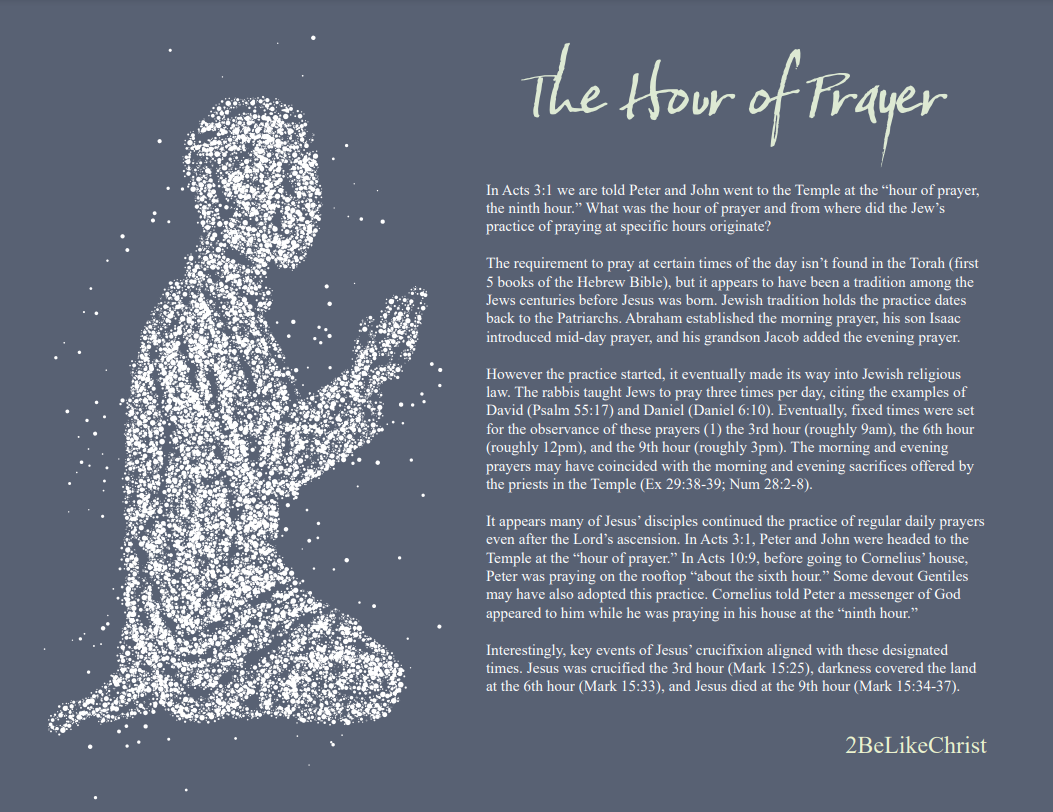
Have you ever felt the need for a moment of prayer and reflection during the busyness of your day? The 9th Hour Prayer in the Bible offers a powerful opportunity to pause, connect with God, and find solace in His presence amidst the chaos of life. This ancient practice, rooted in the Book of Acts, holds immense spiritual benefits for those who engage in it with sincerity and faith.
The 9th Hour Prayer, also known as the mid-afternoon prayer or the Hour of Prayer, was observed by early Christians as a sacred time to come together in unity and seek God’s guidance and intervention. By setting aside this dedicated time each day, we can cultivate a deeper spiritual awareness, strengthen our relationship with God, and experience a sense of peace and renewal that transcends our circumstances. Join us on a journey through the significance and blessings of the 9th Hour Prayer in the Bible, and discover the transformative power of seeking God in the midst of our daily lives.
Unlocking the Power of the 9th Hour Prayer in the Bible
The 9th Hour Prayer in the Bible
The 9th Hour prayer, also known as the “mid-afternoon prayer” or “prayer of three in the afternoon,” is a significant moment of prayer mentioned in the Bible. This specific hour of prayer holds deep significance in Christian tradition and is rooted in biblical teachings.
One of the key references to the 9th Hour prayer can be found in the New Testament in the Book of Acts. In Acts 3:1, Peter and John were going up to the temple at the time of prayer – the ninth hour. This indicates that the early Christians observed fixed times of prayer throughout the day, with the 9th Hour being one of those important moments.
Another crucial mention of the 9th Hour prayer is in the Gospel of Matthew, during the crucifixion of Jesus. In Matthew 27:46, it states that about the ninth hour, Jesus cried out in a loud voice. This moment signifies the profound significance of the 9th Hour as a time of prayer and reflection.
Historically, the practice of praying at the 9th Hour can be traced back to Jewish customs, where the hours of prayer were observed daily. The Christian tradition adopted this practice, emphasizing the importance of pausing and turning to prayer at different times of the day.
The 9th Hour prayer is seen as a time of reflection, repentance, and seeking God’s guidance. It is a moment to pause amidst the busyness of life and connect with the divine. Many Christians today still observe the practice of praying at the 9th Hour, either individually or in community settings.
As believers engage in the 9th Hour prayer, they are invited to follow the example of Jesus and the early Christians in dedicating specific times for prayer and communion with God. This practice fosters spiritual discipline, deepens faith, and allows individuals to align their hearts with God’s will.
In conclusion, the 9th Hour prayer in the Bible serves as a reminder of the importance of setting aside dedicated moments for prayer and seeking God. It is a tradition that spans centuries and continues to hold relevance in the lives of believers today. May we be inspired to cultivate a habit of prayer at the 9th Hour, drawing closer to the Divine and experiencing the transformative power of communion with God.
What is the 9th hour of prayer in the Bible?
In the Bible, the 9th hour of prayer refers to the time of day when the apostles Peter and John went to the temple to pray. This is detailed in the book of Acts, specifically in Acts 3:1. The 9th hour corresponds to approximately 3:00 p.m. in our modern timekeeping. It was a common practice for Jews to pray at specific times during the day, and the 9th hour was one of these designated times for prayer.
What is the spiritual meaning of the ninth hour?
In the Bible, particularly in the New Testament, the ninth hour holds spiritual significance. The ninth hour is referenced in the Gospels as the time when Jesus died on the cross. According to the Gospel of Mark 15:34-37, at the ninth hour, Jesus cried out, “My God, my God, why have you forsaken me?” and then breathed his last.
The spiritual significance of the ninth hour is often interpreted as a moment of completion and fulfillment of God’s plan of salvation. It signifies the climax of Jesus’ sacrifice for humanity’s redemption. Additionally, the ninth hour is seen as a time of prayer and reflection, as it was one of the hours of daily Jewish prayer.
Furthermore, the ninth hour is also associated with the outpouring of the Holy Spirit. In the Acts of the Apostles 3:1, Peter and John go to the temple at the ninth hour, where they encounter a man who is healed in the name of Jesus Christ. This event marks the beginning of the early Christian church’s ministry empowered by the Holy Spirit.
Overall, the ninth hour in the Bible symbolizes the profound sacrificial love of Jesus, the completion of God’s plan of salvation, a time of prayer and reflection, and the empowerment of the Holy Spirit for ministry.
What is the ninth hour in Matthew 27-46?
In Matthew 27:46, the ninth hour refers to the time when Jesus was on the cross and cried out, “My God, my God, why have you forsaken me?” This event is significant because it marks the moment when Jesus felt the weight of the sins of the world upon him and experienced a sense of separation from God. The *ninth hour* is often interpreted as being around 3:00 p.m. in the afternoon.
What is the 9 o’clock prayer?
The 9 o’clock prayer is a tradition in some Christian denominations where believers pause to say a prayer at 9:00 AM. This practice is based on the events described in the Book of Acts, specifically Acts 3:1 where Peter and John went to the temple at the “hour of prayer,” which was around 3:00 PM in Jewish time.
While the Bible does not specifically mention a 9 o’clock prayer, the tradition has developed as a way for Christians to set aside a specific time each day for prayer and reflection. Prayer throughout the day is encouraged in the Bible, with references to morning, evening, and other times of prayer. The 9 o’clock prayer serves as a reminder to turn our hearts and minds toward God in the midst of our daily activities.