
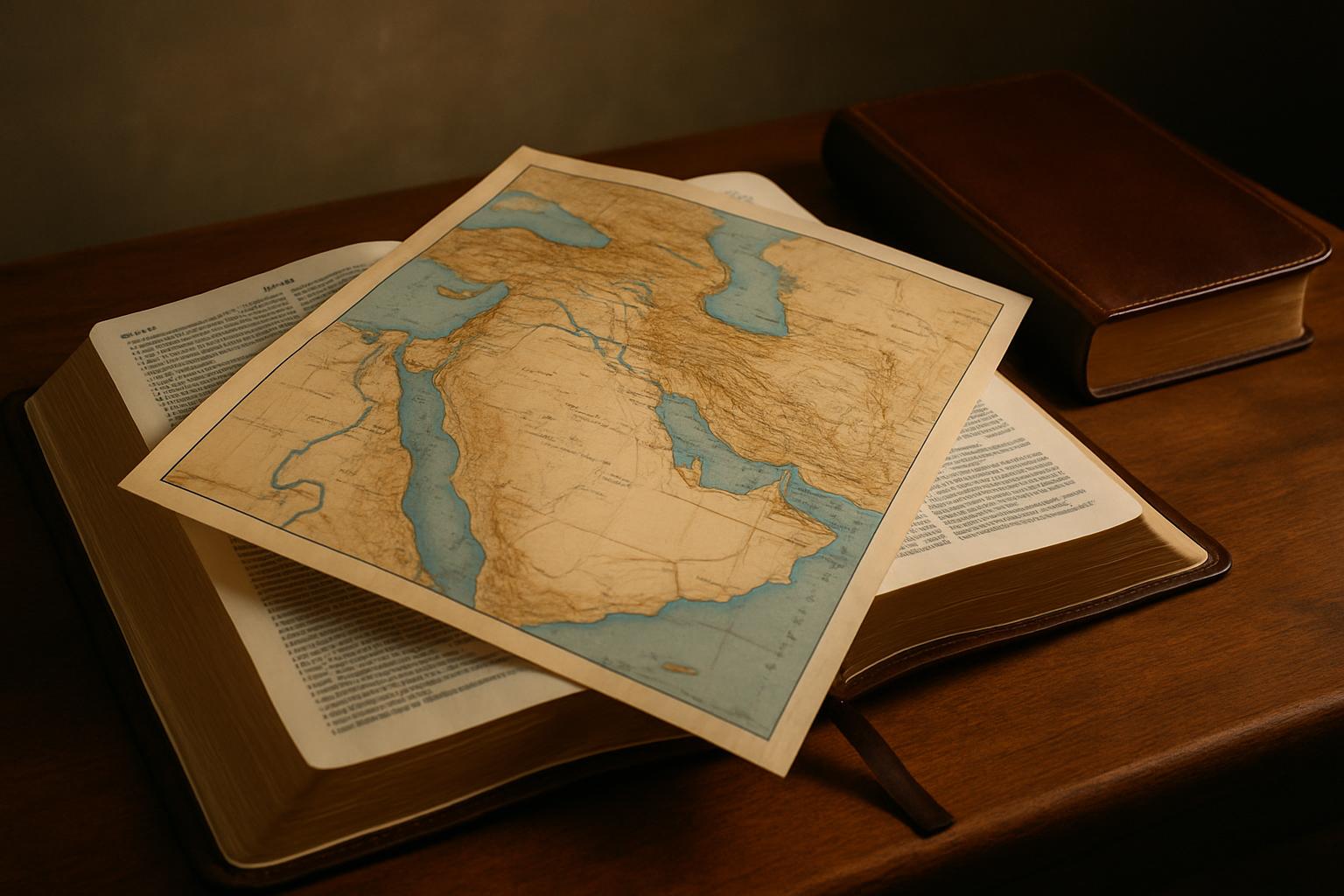
Have you ever wondered what the lands of the Middle East looked like during Bible times? In this blog post, we will explore the Map of Middle East Bible Times, uncovering the geographical settings of some of the most iconic biblical stories. Understanding the location and terrain of the ancient Middle East can provide invaluable context to the scriptures we study, enriching our understanding of the historical and cultural background of the Bible.
By delving into the Map of Middle East Bible Times, we can visualize the journeys of biblical figures such as Abraham, Moses, and Jesus, gaining a deeper appreciation for the challenges they faced and the significance of the places they visited. Connecting the biblical narratives to their geographical settings brings the stories to life in a whole new way, allowing us to walk in the footsteps of our spiritual ancestors and experience the richness of the biblical world firsthand. Join us on this journey through the landscapes of the Middle East in Bible times, and discover the profound insights waiting to be unearthed.
Exploring the Ancient Landscapes: Mapping the Middle East in Biblical Times
Map of Middle East Bible Times
The Middle East during biblical times was a region of significant historical and cultural importance. The lands encompassed in the Bible were not only the backdrop for many notable events but also played a crucial role in the development of various religions and civilizations. Understanding the geographical context of the biblical narratives can provide valuable insights into the events and people mentioned in the scriptures.
The map of the Middle East during Bible times includes several key locations that are of particular significance in biblical history. One such location is Jerusalem, the capital of ancient Israel and Judah. Jerusalem was not only a political and religious center but also the site of the temple, the holiest place in Judaism. It features prominently in both the Old and New Testaments.
Another important location on the map is Mesopotamia, often referred to as the cradle of civilization. It was in this region that the early patriarchs of the Bible, such as Abraham, lived before journeying to the land of Canaan. Mesopotamia was also the setting for the captivity of the Israelites in Babylon, as described in the books of Daniel and Ezekiel.
To the south of Mesopotamia lies Egypt, another crucial location in biblical history. Egypt is mentioned numerous times in the Bible, most notably in the story of the Exodus, where Moses led the Israelites out of slavery. The river Nile, the pyramids, and the cities of Memphis and Thebes are all featured in the biblical narrative.
Further to the north, along the eastern coast of the Mediterranean Sea, are the lands of Phoenicia and Philistia. These coastal regions were important centers of trade and commerce, connecting the empires of Egypt and Mesopotamia. The Phoenician city of Tyre and the Philistine city of Gaza are mentioned in the Bible in relation to their interactions with the Israelites.
Moving eastward from the Mediterranean coast, one encounters the lands of Moab, Ammon, and Edom, often referred to as the Transjordan territories. These regions were inhabited by neighboring tribes that frequently interacted with the Israelites, sometimes as allies and other times as adversaries. The stories of Ruth, Balaam, and the prophet Elisha involve these regions.
Overall, the map of the Middle East during Bible times provides a visual representation of the diverse landscapes and peoples that feature prominently in the biblical narrative. By studying the geographical context of the scriptures, one can gain a deeper appreciation for the interconnectedness of history, culture, and faith in the ancient world.
What was the Middle East in biblical times?
In biblical times, the Middle East was known as the Holy Land and was the setting for many significant events in the Bible. This region includes modern-day countries such as Israel, Palestine, Egypt, Jordan, Lebanon, Syria, and Iraq. It is considered the cradle of civilization and the birthplace of Judaism, Christianity, and Islam. The Middle East was a crossroads of cultures and civilizations, with its cities and landscapes playing key roles in many biblical stories and teachings.
Is Croatia mentioned in the Bible?
No, Croatia is not specifically mentioned in the Bible. The geographical focus of the Bible primarily revolves around the ancient Near East, particularly regions like Israel, Egypt, Mesopotamia, and Asia Minor. Croatia, as a modern-day country in Europe, does not have any direct references in the biblical texts.
What continent did the Bible take place in?
The events of the Bible took place in the continent of Asia. The regions primarily involved include modern-day Israel, Palestine, Egypt, Turkey, and parts of surrounding countries in the Middle East.
Where is Asia in Bible times?
Asia in Bible times referred to the region known as Asia Minor, which is modern-day Turkey. This region played a significant role in the spread of Christianity, with several New Testament books referencing cities and churches in Asia Minor. The apostle Paul undertook missionary journeys to areas such as Ephesus, Colossae, and Smyrna, all located in Asia Minor. Additionally, the seven churches mentioned in the book of Revelation were also situated in this region. Overall, Asia in Bible times encompassed a key part of the ancient world where early Christian communities flourished.