
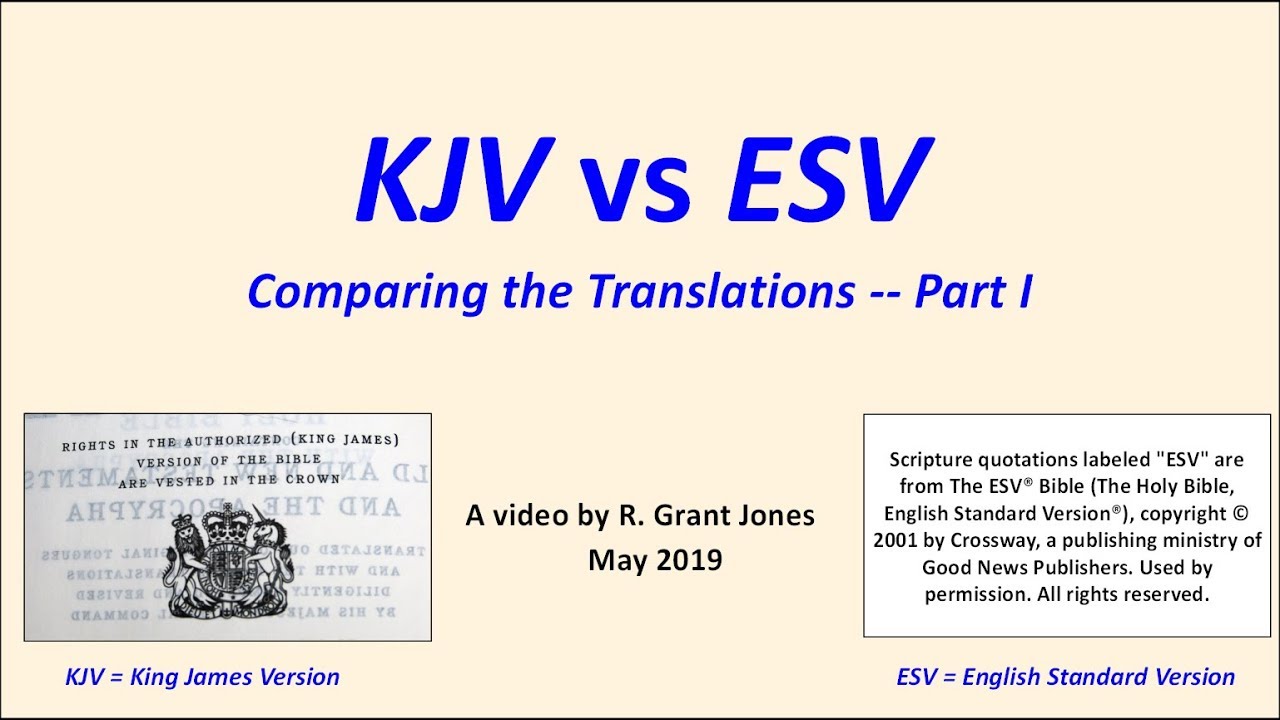
Have you ever wondered about the differences between the English Standard Version (ESV) and the King James Version (KJV) of the Bible? In this blog post, we will delve into the nuances and unique characteristics of these two popular translations to help you discover which one might best suit your personal reading and study preferences. By understanding the distinctions between the ESV and the KJV, you can gain a deeper appreciation for the richness of the biblical text and enhance your spiritual journey.
The English Standard Version is known for its modern language and readability, making it a great choice for those seeking a contemporary yet faithful translation of the Bible. On the other hand, the King James Version, with its historic and poetic language, appeals to readers looking for a more traditional and formal rendition of the Scriptures. By exploring the strengths and weaknesses of each version, you can choose the one that resonates most with your heart and helps you connect with the Word of God on a deeper level.
Comparing the ESV and KJV Bible Versions: Understanding the Key Differences
The English Standard Version (ESV) and the King James Version (KJV) are two widely known and revered translations of the Bible. Both versions have their own unique characteristics and histories that have made them popular among readers and scholars alike. Let’s take a closer look at the English Standard Version (ESV) and the King James Version (KJV) to better understand their key differences and similarities.
The King James Version (KJV), also known as the Authorized Version, was first published in 1611 and has been a staple in English-speaking churches for centuries. It was commissioned by King James I of England and was translated from the original Hebrew and Greek texts. One of the most distinctive features of the KJV is its use of archaic language, which gives it a poetic and majestic quality. Many people appreciate the KJV for its historical significance and cultural impact.
On the other hand, the English Standard Version (ESV) is a more modern translation that was first published in 2001. The ESV aims to retain the literary beauty and accuracy of the KJV while updating the language to make it more accessible to contemporary readers. It is known for its faithfulness to the original languages and its readability. The ESV has gained popularity among evangelical Christians and scholars for its balance between word-for-word and thought-for-thought translation.
One of the key differences between the ESV and the KJV is their textual basis. The KJV is based on the Textus Receptus, a Greek text that was compiled in the 16th century. This text was criticized for its limited manuscript evidence and inaccuracies. In contrast, the ESV is based on the Masoretic Text of the Hebrew Bible and the Critical Text of the Greek New Testament, which are considered to be more reliable and accurate by modern scholars.
Another difference between the two versions is their language style. The KJV uses formal and archaic language, which can be difficult for some readers to understand. The ESV, on the other hand, uses modern English that is easier to comprehend while still maintaining a level of reverence and respect for the original text.
In terms of popularity and usage, the KJV has been the dominant English Bible translation for centuries. It is still widely used in many churches and religious communities around the world. The ESV, however, has gained a significant following in recent years, especially among younger readers and scholars who appreciate its modern language and accuracy.
Ultimately, whether you prefer the English Standard Version or the King James Version comes down to personal preference. Some people may prefer the traditional and poetic language of the KJV, while others may appreciate the readability and accuracy of the ESV. Both versions have their strengths and weaknesses, but they both serve the important purpose of making the Word of God accessible to readers in the English language.
What’s the difference between the English Standard Bible and King James Version?
The English Standard Version (ESV) and the King James Version (KJV) are both popular translations of the Bible, but there are some key differences between them:
1. Language: The KJV was published in 1611 and uses archaic language that can be difficult for modern readers to understand. The ESV, on the other hand, was first published in 2001 and aims to retain the beauty and majesty of the language of the KJV while using more contemporary English.
2. Translation Philosophy: The KJV is a formal equivalence translation, which means it seeks to translate word-for-word from the original languages. The ESV also leans towards formal equivalence but includes some elements of dynamic equivalence to improve readability.
3. Textual Basis: The KJV is based on the Textus Receptus Greek text for the New Testament, while the ESV relies on a critical edition of the Greek New Testament that takes into account a wider range of ancient manuscripts.
4. Updates: The KJV has remained largely unchanged since its original publication, while the ESV has undergone some minor revisions over the years to improve accuracy and readability.
In summary, while both the ESV and KJV are respected translations of the Bible, the ESV offers a more accessible and updated version of the text compared to the traditional language of the KJV.
Is English Standard Version Bible accurate?
The English Standard Version (ESV) Bible is considered to be a highly accurate and reliable translation of the Bible. It aims to provide a literal and word-for-word rendering of the original Hebrew, Aramaic, and Greek texts, making it a popular choice among scholars, pastors, and readers looking for a faithful representation of the biblical manuscripts. However, like any translation, the ESV may have some limitations or nuances due to the complexities of language and culture. Overall, the ESV is widely respected for its commitment to faithfulness to the original text and is often recommended for serious study and reflection.
Which version of the English Bible is best?
The question of which version of the English Bible is best is a highly subjective one and ultimately depends on personal preference and the specific needs of the individual. Different versions of the Bible, such as the King James Version, the New International Version, the English Standard Version, and others, have their own strengths and weaknesses.
Some people prefer the King James Version for its beautiful and poetic language, while others may find it more challenging to understand due to its archaic vocabulary and sentence structure. The New International Version is often praised for its readability and clarity, making it a popular choice for those who are new to reading the Bible.
The English Standard Version is known for its accuracy in translation and its balance between readability and literalness. Ultimately, it is recommended to explore different versions of the Bible and see which one resonates most with you in terms of language, clarity, and overall understanding of the text.
Which translation of the Bible is closest to the original text?
The translation of the Bible that is considered closest to the original text is the Hebrew Bible (also known as the Old Testament). This is primarily because the Hebrew Bible was written in Hebrew and Aramaic, and certain translations like the Jewish Publication Society (JPS) Tanakh aim to stay as faithful as possible to the original language and meaning of the text. For the New Testament, scholars often refer to critical editions of the Greek text, such as the Nestle-Aland or United Bible Societies editions, as they strive to reconstruct the earliest and most reliable manuscripts available.