
Have you ever wondered about the identity of Rama in the Bible? Join us on a fascinating journey as we delve into the scriptures to uncover the mystery behind this intriguing figure. In this blog post, we will explore the significance of Rama and how his story can provide insights and inspiration for our own lives.
By learning more about Rama in the Bible, we can gain a deeper understanding of the rich tapestry of characters and stories that make up the Holy Scriptures. Discovering the role and symbolism of Rama can enrich our spiritual knowledge and help us draw valuable lessons that are relevant to our contemporary world. Join us as we unravel the enigma of Rama and explore the profound wisdom hidden within the biblical narrative.
Discovering the Biblical Identity of Rama: Unveiling the Mystery
Rama in the Bible
In the Bible, Rama is mentioned in the Old Testament as a place rather than a person. The name Rama appears in several books of the Bible, primarily in the context of historical events and geographical locations. One of the most well-known references to Rama is found in the book of Jeremiah, specifically in Jeremiah 31:15.
In Jeremiah 31:15, Rama is associated with the mourning of the Rachel, the wife of Jacob, for her children who were exiled. The verse reads, “A voice is heard in Rama, lamentation, and bitter weeping. Rachel is weeping for her children; she refuses to be comforted for her children because they are no more.” This passage is often interpreted as a prophecy of the sorrow that the Israelites would experience during the Babylonian exile.
Additionally, Rama is mentioned in the book of Matthew in the New Testament, specifically in Matthew 2:18. In this passage, the Gospel writer quotes the verse from Jeremiah, connecting it to King Herod’s order to massacre the male infants in Bethlehem in an attempt to kill the baby Jesus. The parallel between the ancient mourning in Rama and the contemporary massacre in Bethlehem serves to highlight the fulfillment of prophecy in Jesus’ birth and the subsequent events surrounding his life.
It is important to note that while Rama appears in the Bible as a place linked to significant historical and prophetic events, there is no direct person named Rama in the biblical narrative. The significance of Rama lies in its symbolic representation of mourning, sorrow, and the fulfillment of prophecy within the broader biblical context.
Is Ramah a real person in the Bible?
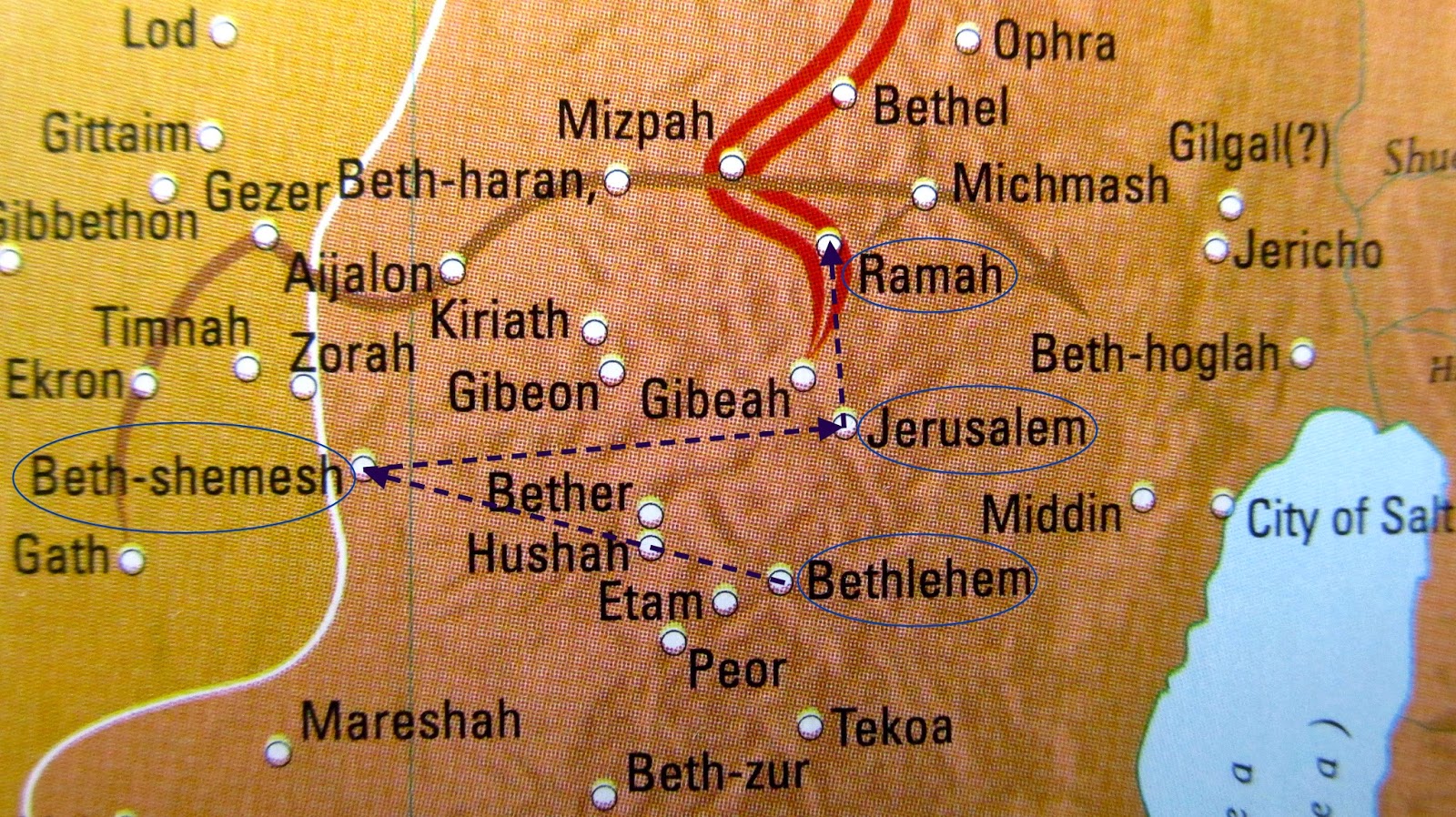
Ramah is not a specific person in the Bible, but rather a place mentioned in the Old Testament. It was a city located in the territory of the tribe of Benjamin, to the north of Jerusalem. Ramah is often associated with the prophet Samuel, as it was the place where he lived and judged the people of Israel. In the book of 1 Samuel, Ramah is mentioned several times in connection with Samuel’s activities and interactions with Saul and David.
Who is Rama according to the Bible?
In the context of the Bible, Rama is a town mentioned in the Old Testament. It is referenced in the book of Jeremiah, specifically in Jeremiah 31:15, which says, “This is what the Lord says: A voice is heard in Ramah, mourning and great weeping, Rachel weeping for her children and refusing to be comforted, because they are no more.” This passage refers to the mourning of the Israelites as they were taken into captivity.
What is Rama in Matthew?
In the context of the Bible, Rama in Matthew refers to a town in ancient Israel. It is mentioned in the Gospel of Matthew in relation to a prophecy in the Old Testament book of Jeremiah. The prophet Jeremiah wrote about the mourning and weeping in Rama after the massacre of the innocent children by King Herod, as mentioned in Matthew 2:16-18. This event is known as the Massacre of the Innocents, where Herod ordered the killing of all male infants in Bethlehem in an attempt to eliminate the newborn King of the Jews, Jesus Christ.
Is Ramah death in the Bible?
No, Ramah is not portrayed as dead in the Bible. In fact, Ramah is a location mentioned several times in the Old Testament. It was a city in the territory of the tribe of Benjamin, located north of Jerusalem. One significant event that took place in Ramah is when Rachel, the wife of Jacob, died and was buried near the city (Genesis 35:19). Additionally, Ramah is where the prophet Samuel lived and where he anointed King Saul as the first king of Israel (1 Samuel 9:25-10:1). Later, during the time of the divided kingdom, Ramah became part of the northern kingdom of Israel. The city is referenced in both historical and prophetic contexts but is not associated with death in the Bible.