
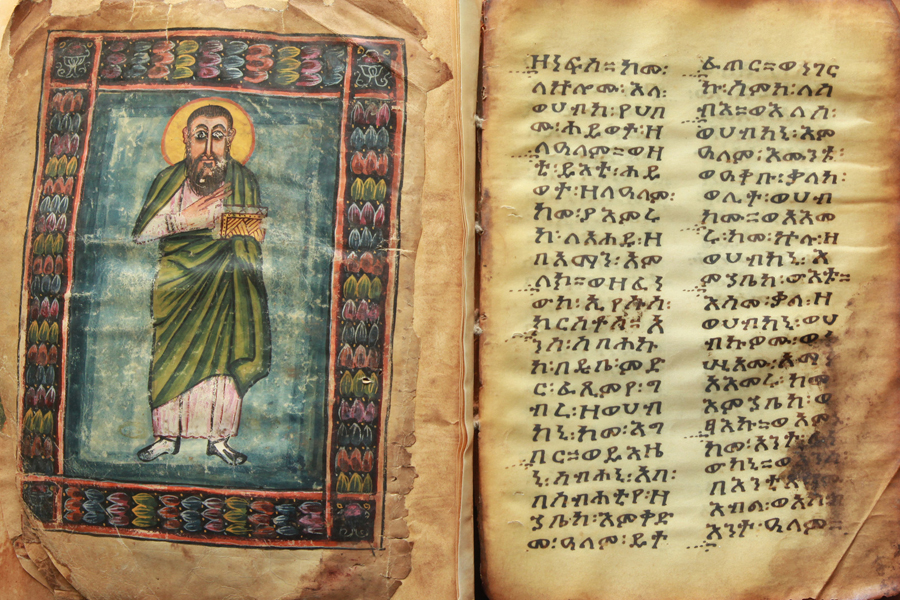
Have you ever wondered when the Ethiopian Bible was written? Delving into the history and origins of this important religious text can provide valuable insights into its significance and impact on Ethiopian culture and Christianity as a whole. In this blog post, we will explore the timeline and key events surrounding the creation of the Ethiopian Bible, shedding light on its rich historical and spiritual context.
Understanding the origins of the Ethiopian Bible not only deepens our appreciation for this ancient text but also helps us grasp the unique perspectives and interpretations it offers. By uncovering the timeline of its composition, we can gain a clearer understanding of how the Ethiopian Bible has shaped religious beliefs and practices in Ethiopia and beyond. Join us on this journey as we uncover the mysteries and wonders of the Ethiopian Bible and its enduring legacy.
Unveiling the Origins: The Date of the Ethiopian Bible’s Authorship
The Ethiopian Bible, also known as the “Ethiopic Bible” or the “Ge’ez Bible,” is a collection of religious texts that is unique to the Ethiopian Orthodox Tewahedo Church. It consists of 81 books, including the traditional Old and New Testament books, as well as several additional books that are not found in other Christian canons. These extra books are commonly referred to as the “Ethiopian apocrypha.”
The exact date when the Ethiopian Bible was written is difficult to pinpoint with absolute certainty due to the complex history of Ethiopia and the transmission of its religious texts. However, scholars generally agree that the translation of the Bible into Ge’ez, the ancient Ethiopian language, likely began in the early centuries of the Common Era.
One of the most important factors in the development of the Ethiopian Bible is the role of the Ethiopian Orthodox Church, which has preserved and maintained the Ge’ez manuscripts for centuries. The church played a crucial role in translating and preserving these texts, ensuring their survival through various political and social upheavals in Ethiopian history.
The origins of the Ethiopian Bible can be traced back to the Aksumite Kingdom, one of the earliest Christian kingdoms in the world. The Aksumites adopted Christianity in the 4th century CE, making Ethiopia one of the first countries to officially embrace the religion. This early adoption of Christianity laid the foundation for the translation and preservation of the Bible in Ge’ez.
Scholars believe that the translation of the Bible into Ge’ez was a gradual process that occurred over several centuries, with different books being translated and added to the canon at different times. The earliest translations are believed to date back to the 5th or 6th centuries, while some of the later additions were completed in the medieval period.
Overall, the Ethiopian Bible is a testament to the rich religious and cultural heritage of Ethiopia. Its unique collection of books and distinctive translation in Ge’ez set it apart from other Christian canons and make it a valuable resource for scholars studying the history of Christianity in Africa.
Is the Ethiopian Bible the oldest Bible?
The Ethiopian Bible is not the oldest Bible. The oldest Bible manuscripts are the Dead Sea Scrolls, which date back to the 3rd century BCE. These scrolls contain some of the earliest known copies of the Hebrew Bible, also known as the Old Testament. While the Ethiopian Bible is one of the oldest complete Bibles still in existence, it is not as old as the Dead Sea Scrolls.
How authentic is the Ethiopian Bible?
The Ethiopian Bible, also known as the Ethiopian Orthodox Tewahedo Church Canon, is considered authentic by the Ethiopian Orthodox Church. It includes several books that are not found in most other versions of the Bible, such as the Book of Enoch and the Book of Jubilees. These additional books are known as the “Apocrypha” or “Deuterocanonical” books.
The canonical status of these books varies among different Christian traditions. While they are accepted as part of the biblical canon by the Ethiopian Orthodox Church, they are not included in the canon of most Western Christian denominations.
It’s important to note that the authenticity and canonicity of religious texts can be a complex and nuanced topic, influenced by historical, cultural, and theological factors. Ultimately, the authenticity of the Ethiopian Bible is a matter of faith and interpretation within the context of the Ethiopian Orthodox tradition.
Who wrote the Bible in Ethiopia?
The Bible was originally written by various authors over a span of centuries. However, in the context of Ethiopia, the Ethiopian Bible, known as the “Ge’ez Bible”, was translated and preserved by Ethiopian scribes and scholars. It includes several ancient texts not found in other versions of the Bible.
What is the oldest complete Bible in the world?
The oldest complete Bible in the world is known as the Codex Sinaiticus. It is a manuscript of the Christian Bible written in the middle of the 4th century, around 350 AD. The Codex Sinaiticus contains the full text of the New Testament, the complete text of the Greek Old Testament (known as the Septuagint), as well as the Epistle of Barnabas and parts of the Shepherd of Hermas. It is considered one of the most important biblical manuscripts due to its antiquity and completeness. The Codex Sinaiticus is currently housed in the British Library in London.