
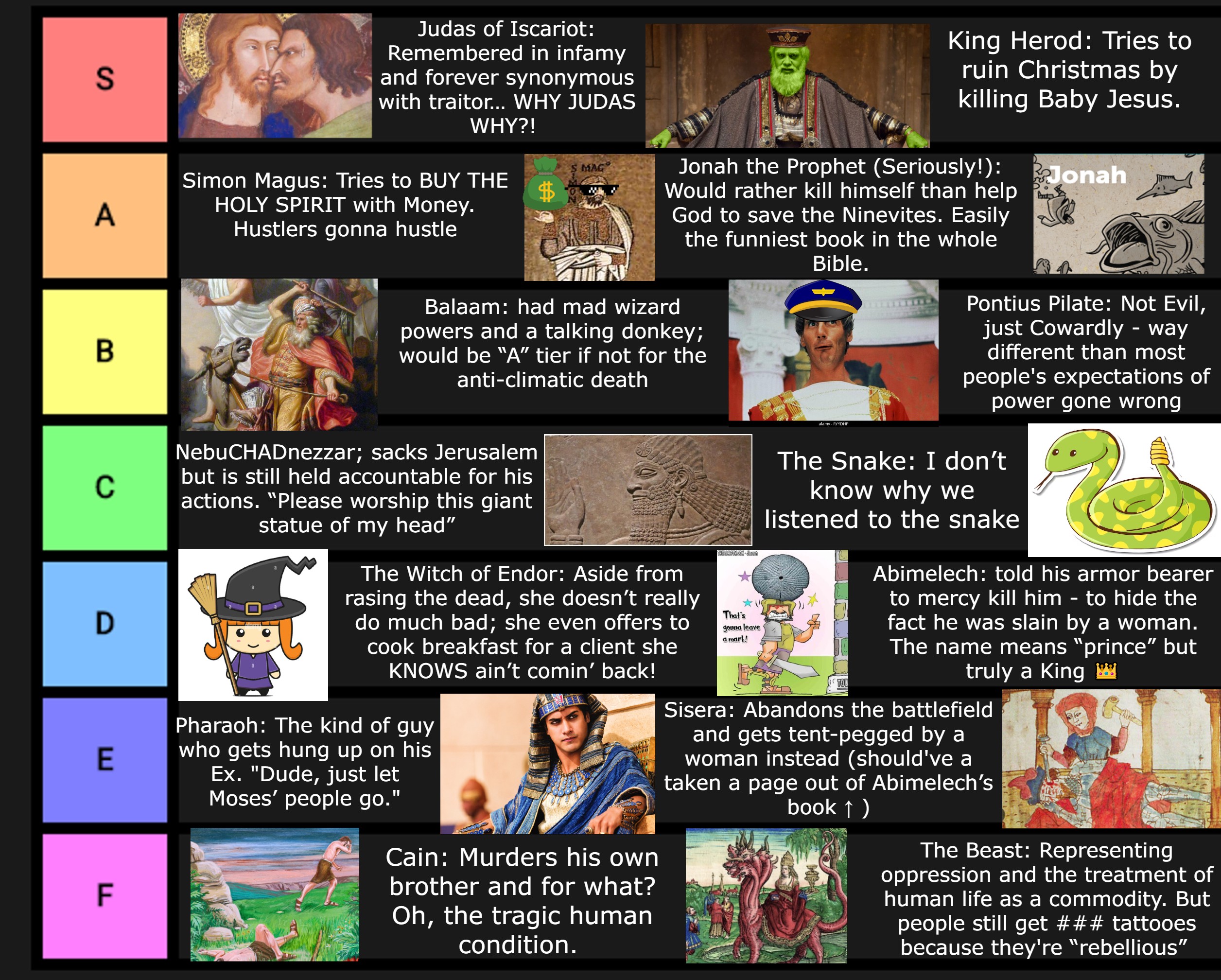
Have you ever been curious about the villains portrayed in the Bible and what lessons we can learn from their stories? In this blog post, we will explore a comprehensive list of villains in the Bible, delving into their backgrounds, actions, and ultimate fates. By studying these characters, we can gain valuable insights into the consequences of evil deeds and the importance of righteousness and redemption.
From notorious figures like King Herod and Jezebel to lesser-known villains such as Haman and Judas Iscariot, the Bible is filled with tales of individuals who chose to walk the path of darkness. By examining their stories, we can reflect on the choices we make in our own lives and strive to embody the virtues of forgiveness, compassion, and moral integrity. Join us on this enlightening journey as we uncover the narratives of the villains in the Bible and discover the timeless lessons they hold for us today.
Unveiling the Darkness: A Comprehensive List of Villains in the Bible
List of Villains in the Bible
The Bible is not only a book of faith and spirituality but also a book that is filled with intriguing characters, including villains who have left their mark on the pages of history. These villains are often portrayed as individuals who oppose God, commit heinous acts, and work against the interests of the righteous. Some of these villains are well-known figures, while others are lesser-known but equally significant in their roles within biblical narratives.
One of the most infamous villains in the Bible is Satan, also known as the Devil. Satan is depicted as a fallen angel who rebelled against God and continues to tempt humanity to sin. His cunning and deceitful nature make him a formidable adversary in the spiritual realm, constantly seeking to lead people astray from following God’s will.
Another notable villain in the Bible is Pharaoh, the ruler of Egypt during the time of Moses. Pharaoh is depicted as a stubborn and proud leader who refuses to let the Israelites go despite facing numerous divine plagues. His heart is hardened by God, leading to his eventual downfall and the liberation of the Israelites from slavery.
The biblical figure of Jezebel is another villain known for her wickedness and idolatry. Jezebel, the queen of Israel, sought to eradicate the worship of the one true God and instead promoted the worship of false idols. Her actions led to conflict and bloodshed, eventually resulting in her violent demise.
One of the most treacherous villains in the Bible is Judas Iscariot, who betrayed Jesus for thirty pieces of silver. Judas’s act of betrayal marked a turning point in Jesus’s life, leading to his crucifixion and death. Judas’s remorse and subsequent suicide serve as a cautionary tale of the consequences of betrayal and greed.
Other notable villains in the Bible include King Herod, who ordered the massacre of infants in an attempt to kill the infant Jesus, and Nebuchadnezzar, the Babylonian king who conquered Jerusalem and took the Israelites into exile. These villains represent the various forms of evil and opposition to God’s plans that are present throughout the biblical narrative.
In conclusion, the Bible is replete with villains who play crucial roles in shaping the course of history and testing the faith of the righteous. These antagonistic figures serve as reminders of the eternal struggle between good and evil and the importance of remaining steadfast in one’s faith amid adversity.
Are there any villains in the Bible?
Yes, there are several villains mentioned in the Bible. One notable villain is Satan, who is depicted as the adversary of God and humanity. Another villain is Pharaoh, the ruler of Egypt who enslaved the Israelites. Additionally, King Herod is portrayed as a villain for ordering the killing of infant boys in an attempt to eliminate Jesus. Other villains in the Bible include Judas Iscariot, who betrayed Jesus, and Jezebel, a wicked queen who promoted idol worship. These villains serve as antagonists in various biblical stories, highlighting themes of sin, temptation, and redemption.
Who is the main villain in Christianity?
In Christianity, the main villain is Satan or the Devil. Satan is portrayed as the adversary of God and humanity, often depicted as tempting individuals to sin and working against the divine plan.
Who are the evil doers in the Bible?
In the Bible, there are various characters and groups identified as evil doers. Some of the most notable ones include:
1. Satan: Often portrayed as the ultimate evil figure in the Bible, tempting individuals to sin and rebel against God.
2. Pharaoh: The ruler of Egypt who oppressed the Israelites and refused to let them go, leading to the ten plagues and ultimately the Exodus.
3. Jezebel: Queen of Israel who led her husband, King Ahab, and the nation into idolatry and wickedness.
4. Judas Iscariot: Betrayed Jesus for thirty pieces of silver, leading to his crucifixion.
5. Nebuchadnezzar: King of Babylon who conquered Jerusalem and took the Israelites into captivity.
6. Herod Antipas: King who ordered the beheading of John the Baptist and mocked Jesus during his trial.
7. The Pharisees and Scribes: Religious leaders who often opposed Jesus and sought to trap him in his words.
8. Cain: Committed the first murder by killing his brother Abel out of jealousy.
These are just a few examples of evil doers depicted in the Bible, serving as cautionary tales of the consequences of turning away from God and embracing sin.
Who are the five bad girls of the Bible?
1. Jezebel: Queen Jezebel was a wicked queen in the Old Testament who led King Ahab and Israel into idolatry.
2. Delilah: Delilah was a woman who betrayed Samson by cutting his hair, leading to his downfall.
3. Athaliah: Queen Athaliah of Judah was known for her ruthless actions, including killing her grandchildren to seize power.
4. Herodias: Herodias conspired to have John the Baptist killed because he criticized her unlawful marriage to Herod.
5. Potiphar’s Wife: Although unnamed, Potiphar’s wife falsely accused Joseph of wrongdoing when he refused her advances.