
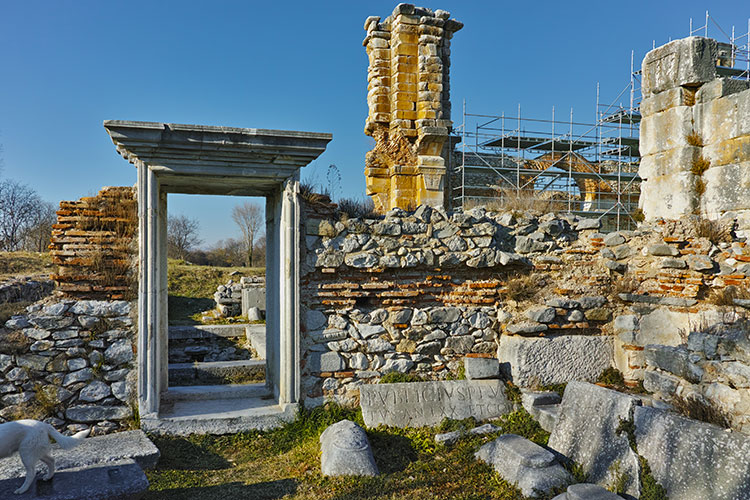
Have you ever wondered about the significance of the Church of Philippi in the Bible? Join us as we dive into the rich history and profound teachings associated with this early Christian community. Discover how the Church of Philippi can inspire and guide us in our own faith journey today, offering valuable lessons and timeless wisdom that continue to resonate with believers around the world.
As we explore the story of the Church of Philippi in the Bible, we will uncover the enduring lessons of unity, perseverance, and generosity that are woven throughout its narrative. By delving into the experiences of the early Christians in Philippi, we can glean insights that empower us to navigate the challenges of contemporary life with clarity and purpose. Join us on this illuminating journey as we reflect on the timeless truths and transformative power of the Church of Philippi in the Bible.
Unveiling the Rich History of the Church of Philippi in the Bible
The Church of Philippi, mentioned in the New Testament of the Bible, holds a significant place in early Christian history. The establishment of the church is attributed to the apostle Paul, who visited Philippi around 49-50 AD during his second missionary journey. The city of Philippi, located in Macedonia, was named after King Philip II of Macedon, the father of Alexander the Great. It was a Roman colony and an important commercial center.
The founding of the Church of Philippi: According to the book of Acts, Paul visited Philippi after receiving a vision of a man from Macedonia pleading for help. Upon arrival, he preached the gospel to a group of women gathered by the riverside, one of whom was Lydia, a dealer of purple cloth. She and her household were among the first converts in Philippi.
The conversion of the jailer: Another significant event in the history of the Church of Philippi is the conversion of the Philippian jailer. After an earthquake shook the prison where Paul and Silas were held, the jailer, fearing for his life, was about to kill himself when Paul assured him that all the prisoners were still there. Touched by this act of mercy, the jailer asked Paul and Silas what he needed to do to be saved. They replied, “Believe in the Lord Jesus, and you will be saved—you and your household.” The jailer and his family were baptized, becoming followers of Christ.
Paul’s letters to the Philippians: The Epistle to the Philippians, written by Paul while he was imprisoned, is a letter of gratitude and encouragement to the church in Philippi. Despite his own hardships, Paul expressed joy and thanksgiving for the partnership and support of the Philippian believers in spreading the gospel. He also encouraged them to stand firm in unity and humility, following the example of Christ.
Themes of the letter: The letter to the Philippians emphasizes themes of joy, unity, humility, and partnership in the gospel. Paul encourages the believers to rejoice in the Lord always, to be of the same mind, and to consider others above themselves. He reminds them of the example of Christ, who humbled himself and became obedient unto death on a cross.
Legacy of the Church of Philippi: The Church of Philippi played a significant role in the spread of Christianity in the early Roman world. Its members, including Lydia, the jailer, and others, became models of faith and perseverance for future generations of believers. The letter to the Philippians continues to inspire and instruct Christians today, reminding them of the importance of joy, unity, and humility in their walk with Christ.
What was so special about the church in Philippi?
The church in Philippi was special for several reasons:
1. It was the first church established in Europe by the apostle Paul during his second missionary journey.
2. The Philippians were known for their generosity. They financially supported Paul’s ministry even when other churches did not, as seen in Paul’s letter to the Philippians.
3. This church had a close relationship with Paul, and they were partners in the gospel. Paul expressed his deep affection for them in his letter, calling them his “joy and crown” (Philippians 4:1).
4. Despite facing persecution and opposition, the Philippian believers remained faithful and united in their faith.
Overall, the church in Philippi stood out for its faithfulness, generosity, and partnership in spreading the gospel.
Why did Paul write to the Philippian church?
Paul wrote to the Philippian church to thank them for their partnership in the Gospel (Philippians 1:3-5), encourage them to stand firm in the face of persecution (Philippians 1:27-30), address divisions and encourage unity (Philippians 2:1-4), warn against false teachings (Philippians 3:2), emphasize the importance of joy and contentment in Christ (Philippians 4:4), and express his gratitude for their financial support (Philippians 4:10-18). Overall, Paul’s letter to the Philippians was meant to strengthen their faith, address pressing issues, and foster unity and love within the church community.
Where is biblical Philippi located today?
Biblical Philippi is located in modern-day Greece. The ancient city of Philippi was situated in the northeastern part of the Greek peninsula, near the ancient region of Macedonia. Today, the archaeological site of Philippi is a popular destination for tourists and scholars interested in exploring its rich biblical history.
What was Paul’s favorite church?
Paul’s favorite church was the church in Philippi. He had a special connection with the Philippians and often expressed his love and affection for them in his letters. In the letter to the Philippians, Paul writes about his gratitude for their partnership in the Gospel and their support of his ministry. The Philippian church was known for their generosity and zeal for the faith, which made them dear to Paul’s heart.