
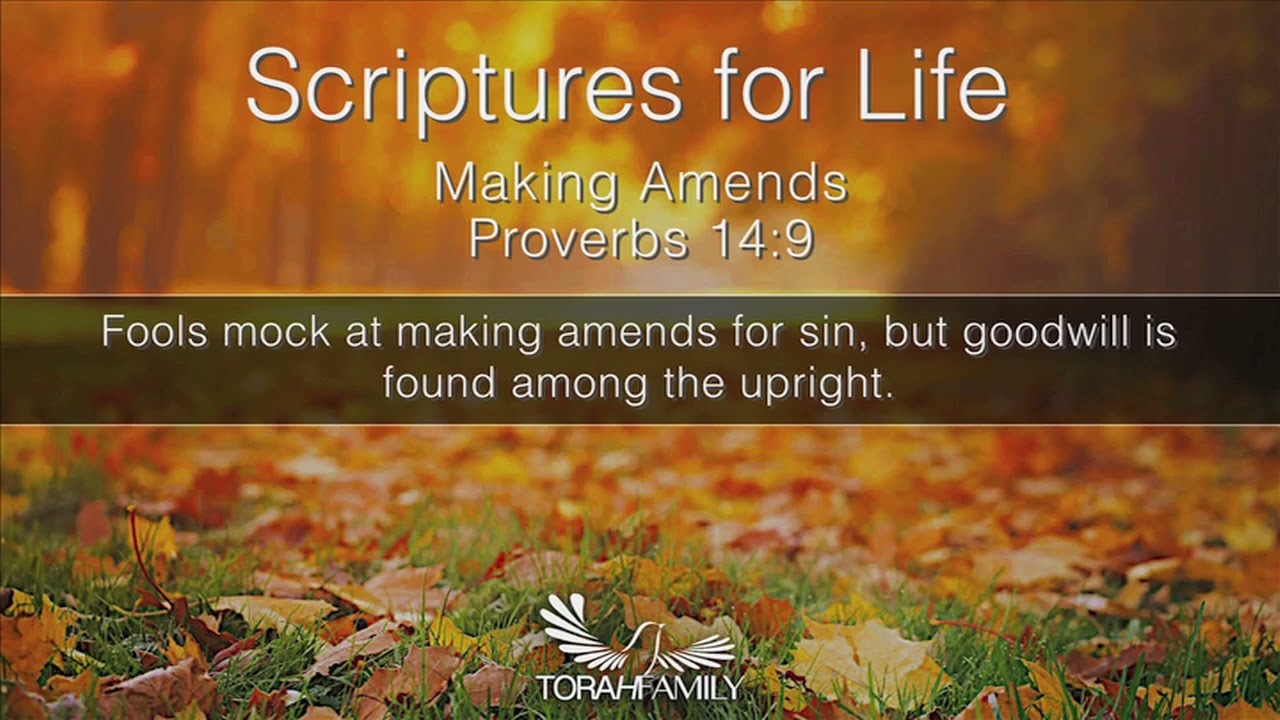
Have you ever wondered what the Bible has to say about making amends? In times of conflict or wrongdoing, the act of seeking reconciliation and making amends is not only beneficial for repairing relationships but also crucial for spiritual growth. The Bible offers valuable guidance on how to approach these situations with humility, honesty, and love.
In this blog post, we will explore key passages from the Bible that highlight the importance of making amends and seeking forgiveness. By delving into these teachings, we can gain a deeper understanding of the power of reconciliation and the transformative impact it can have on our lives and those around us. Join us as we uncover the wisdom and insights that the Bible provides on the profound act of making amends.
Exploring Biblical Perspectives on Seeking Reconciliation and Making Amends
What Does the Bible Say About Making Amends
Making amends is an important concept in the Bible that carries with it the idea of seeking reconciliation and restoration in relationships. The Bible emphasizes the importance of making amends in order to maintain healthy and thriving relationships with others.
One of the key verses that addresses the idea of making amends is found in Matthew 5:23-24, where Jesus instructs his followers to reconcile with others before coming to worship God: “So if you are offering your gift at the altar and there remember that your brother has something against you, leave your gift there before the altar and go. First be reconciled to your brother, and then come and offer your gift.”
This verse highlights the importance of addressing conflicts and disagreements with others before seeking to make things right with God. It underscores the significance of making amends as a crucial step in maintaining healthy relationships and ensuring spiritual growth.
Another important verse that speaks to the concept of making amends is found in Luke 17:3-4, where Jesus provides guidance on how to handle offenses: “Pay attention to yourselves! If your brother sins, rebuke him, and if he repents, forgive him, and if he sins against you seven times in the day, and turns to you seven times, saying, ‘I repent,’ you must forgive him.”
This passage emphasizes the necessity of both seeking forgiveness and extending forgiveness in the process of making amends. It highlights the importance of humility, repentance, and reconciliation in restoring broken relationships and fostering a spirit of unity and love among believers.
In addition to these explicit teachings on making amends, the Bible is filled with examples of individuals who sought to reconcile with others and make things right. From Jacob and Esau’s reconciliation in Genesis to Paul’s letter to Philemon urging him to forgive Onesimus, the Bible presents numerous accounts of individuals taking the initiative to make amends and restore relationships.
Overall, the Bible emphasizes the importance of making amends as a vital aspect of Christian living. It underscores the value of humility, reconciliation, and forgiveness in maintaining healthy relationships and fostering unity within the body of Christ. By following the guiding principles and examples provided in Scripture, believers can navigate conflicts and disagreements with grace and wisdom, ultimately leading to greater harmony and peace in their relationships.
What did Jesus say about making amends?
In the Bible, Jesus taught about making amends in Matthew 5:23-24, where he said: “Therefore, if you are offering your gift at the altar and there remember that your brother or sister has something against you, leave your gift there in front of the altar. First go and be reconciled to them; then come and offer your gift.” This passage emphasizes the importance of seeking reconciliation with others before approaching God with offerings, highlighting the value of making amends and restoring relationships with others.
How to biblically make amends?
Making amends biblically involves acknowledging our wrongdoings and seeking reconciliation with those we have hurt. Here are some steps to make amends according to the Bible:
1. Confess your sins: Start by admitting your mistakes and sins before God. 1 John 1:9 says, “If we confess our sins, he is faithful and just to forgive us our sins and to cleanse us from all unrighteousness.”
2. Repentance: Turn away from your sins and commit to living a life that pleases God. Acts 3:19 states, “Repent, then, and turn to God, so that your sins may be wiped out, that times of refreshing may come from the Lord.”
3. Apologize: Humble yourself and apologize to the person you have wronged. Matthew 5:23-24 teaches, “Therefore, if you are offering your gift at the altar and there remember that your brother or sister has something against you, leave your gift there in front of the altar. First go and be reconciled to them; then come and offer your gift.”
4. Make restitution: If possible, make amends by restoring what was taken or fixing what was broken. Luke 19:8 instructs, “But Zacchaeus stood up and said to the Lord, ‘Look, Lord! Here and now I give half of my possessions to the poor, and if I have cheated anybody out of anything, I will pay back four times the amount.'”
5. Seek forgiveness: Ask for forgiveness from both the person you wronged and from God. Colossians 3:13 reminds us to “Bear with each other and forgive one another if any of you has a grievance against someone. Forgive as the Lord forgave you.”
6. Reconcile: Strive to restore the relationship with the person you have hurt. Matthew 18:15 advises, “If your brother or sister sins, go and point out their fault, just between the two of you. If they listen to you, you have won them over.”
By following these steps and seeking God’s guidance, we can make amends biblically and work towards healing relationships and restoring peace.
Does the Bible command us to reconcile?
The Bible indeed emphasizes the importance of reconciliation. In Matthew 5:23-24, Jesus teaches, “Therefore, if you are offering your gift at the altar and there remember that your brother or sister has something against you, leave your gift there in front of the altar. First go and be reconciled to them; then come and offer your gift.” This highlights the priority of reconciliation even above religious practices. Similarly, in Matthew 18:15, Jesus instructs on how to address conflicts within the community of believers, emphasizing the value of seeking reconciliation. Moreover, 2 Corinthians 5:18 states that God has given us the ministry of reconciliation, underscoring the divine mandate for believers to actively engage in reconciling relationships. Ultimately, reconciliation is a central theme in the Bible, reflecting God’s desire for harmony and restoration among His people.
What does the Bible say about going to someone who wronged you?
In the Bible, Matthew 18:15-17 provides guidance on how to approach someone who has wronged you. It says: “If your brother or sister sins, go and point out their fault, just between the two of you. If they listen to you, you have won them over. But if they will not listen, take one or two others along, so that ‘every matter may be established by the testimony of two or three witnesses.’ If they still refuse to listen, tell it to the church; and if they refuse to listen even to the church, treat them as you would a pagan or a tax collector.”
This passage emphasizes the importance of addressing the issue directly with the person who wronged you first, seeking resolution and reconciliation in a spirit of love and grace. If the person does not respond, further steps may be taken within the community of believers.
Overall, the Bible encourages forgiveness, reconciliation, and restoration of relationships, even in the face of wrongdoing.