
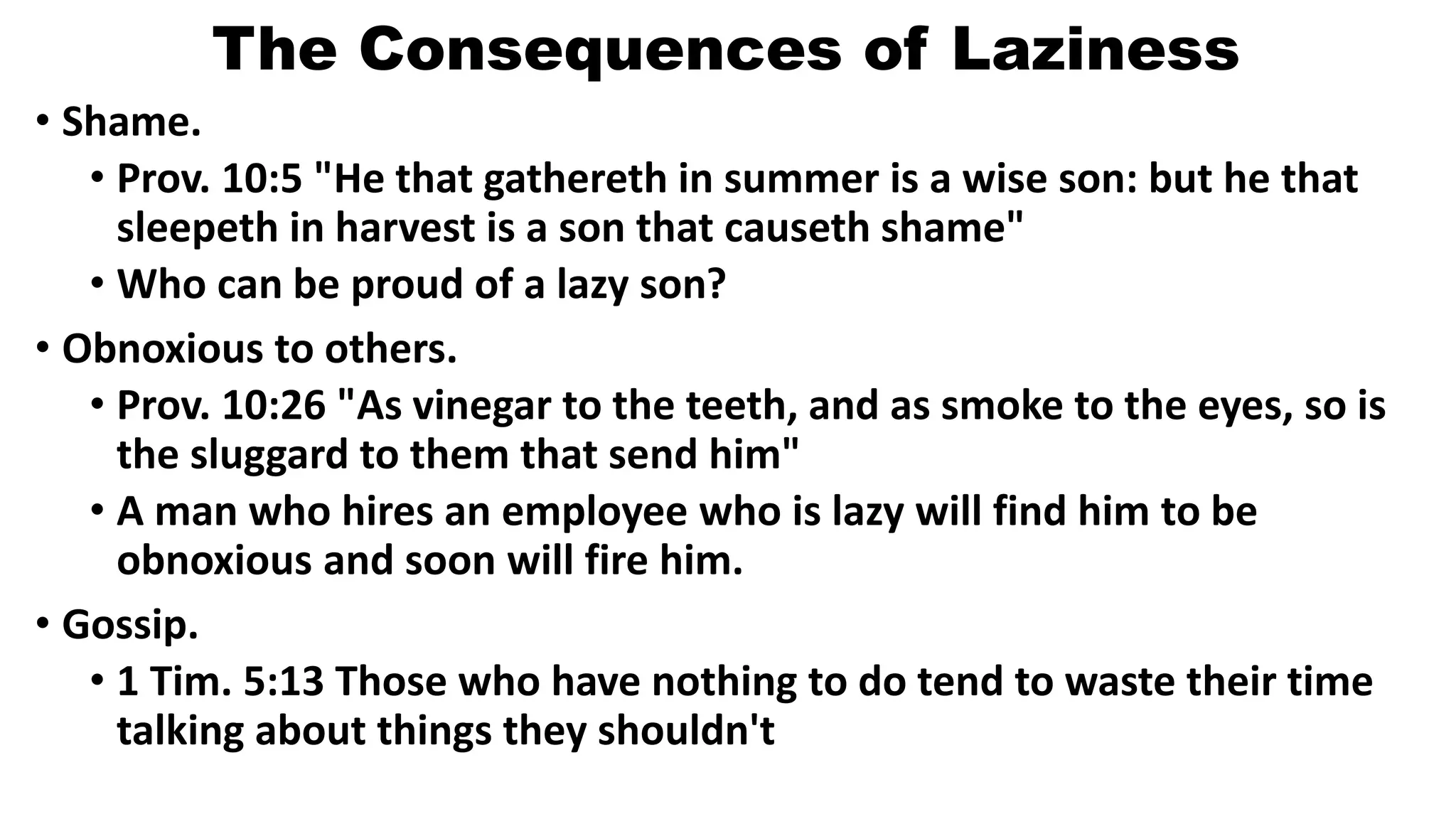
Have you ever considered the consequences of laziness as depicted in the Bible? In today’s fast-paced world, where hustle culture often glorifies productivity and constant activity, the concept of laziness may seem outdated or insignificant. However, the Bible offers profound insights into the detrimental effects of idleness and slothfulness. Exploring these timeless teachings can provide us with valuable lessons on the importance of diligence, responsibility, and stewardship.
In this blog post, we will delve into the insightful wisdom and warning messages found in the Bible regarding laziness. By understanding the consequences of laziness as illustrated in various biblical stories and verses, we can gain a deeper appreciation for the virtues of hard work, discipline, and perseverance. Join us on this reflective journey as we uncover the significance of combating laziness and embracing a proactive, purposeful lifestyle that aligns with God’s teachings.
The perils of sloth: Exploring the repercussions of laziness in the Bible
In the Bible, laziness is portrayed as a detrimental behavior that leads to undesirable consequences. Throughout the scriptures, there are various examples and warnings about the effects of laziness on individuals and society as a whole. Let’s delve into the detailed and extensive content regarding the consequences of laziness in the Bible.
Proverbs 10:4 states, “Lazy hands make for poverty, but diligent hands bring wealth.” This proverb highlights the direct correlation between laziness and lack of prosperity. By choosing to be lazy and negligent in work or responsibilities, individuals are likely to suffer from financial instability and poverty.
Proverbs 13:4 emphasizes the consequences of laziness by stating, “The soul of the sluggard craves and gets nothing, while the soul of the diligent is richly supplied.” Laziness not only leads to material poverty but also leaves individuals unfulfilled and dissatisfied. Those who opt for laziness will miss out on opportunities and rewards that come with hard work and diligence.
Proverbs 20:4 presents a vivid image of the impact of laziness, “The sluggard does not plow after the autumn, so he begs during the harvest and has nothing.” This verse illustrates the cycle of laziness and its consequences – neglecting to prepare and work diligently results in scarcity and dependence on others.
The New Testament also addresses the issue of laziness. In 2 Thessalonians 3:10, it is mentioned, “For even when we were with you, we gave you this rule: ‘The one who is unwilling to work shall not eat.'” This verse underscores the biblical principle that work is a fundamental aspect of human life and that laziness should not be tolerated.
Moreover, Proverbs 6:6-11 uses the example of the ant to admonish the lazy person, “Go to the ant, you sluggard; consider its ways and be wise! It has no commander, no overseer or ruler, yet it stores its provisions in summer and gathers its food at harvest.” The industrious nature of the ant serves as a contrast to laziness, highlighting the importance of being diligent and proactive.
In conclusion, the Bible consistently warns against the consequences of laziness. From financial instability to unfulfillment and dependency, laziness is depicted as a destructive behavior that hinders personal growth and well-being. The scriptures urge individuals to embrace diligence, hard work, and responsibility to avoid the pitfalls associated with laziness.
What are the consequences of being lazy in the Bible?
In the Bible, being lazy is often condemned and warned against due to its negative consequences.
One of the key verses that addresses laziness is Proverbs 6:6-11, which uses the example of the ant to highlight the importance of hard work and diligence. Proverbs 6:9-11 states, “How long will you lie there, you sluggard? When will you get up from your sleep? A little sleep, a little slumber, a little folding of the hands to rest—and poverty will come on you like a thief and scarcity like an armed man.”
Another passage that discusses the consequences of being lazy is Proverbs 19:15, which says, “Laziness brings on deep sleep, and the shiftless go hungry.”
Overall, the Bible teaches that laziness can lead to poverty, hunger, and missed opportunities. It emphasizes the importance of being diligent and hardworking in order to succeed and fulfill God’s purposes.
What are the spiritual consequences of laziness?
In the context of the Bible, laziness is often condemned and seen as a negative trait. The spiritual consequences of laziness can include missed opportunities to fulfill God’s purposes, neglect of one’s duties and responsibilities, and failing to use and develop the talents and gifts that God has given us. Proverbs 6:6-11 warns against the sluggard who refuses to work and ends up in poverty. Similarly, Proverbs 10:4 states that “Lazy hands make for poverty, but diligent hands bring wealth.” In a spiritual sense, being lazy can hinder our growth and progress in our relationship with God, as it demonstrates a lack of faithfulness, obedience, and stewardship of the resources God has entrusted to us. It is important for believers to heed the biblical warnings against laziness and instead strive to be diligent, hardworking, and faithful stewards of the time, talents, and opportunities given to us by God.
What is the sin of being lazy?
In the context of the Bible, the sin of being lazy is often referred to as sloth or laziness. This sin is condemned in various passages throughout the Bible.
One of the most well-known references to laziness can be found in Proverbs 6:6-11, where it says “Go to the ant, you sluggard; consider its ways and be wise! It has no commander, no overseer or ruler, yet it stores its provisions in summer and gathers its food at harvest. How long will you lie there, you sluggard? When will you get up from your sleep? A little sleep, a little slumber, a little folding of the hands to rest— and poverty will come on you like a thief and scarcity like an armed man.”
Similarly, in Proverbs 10:4-5, it states that “Lazy hands make for poverty, but diligent hands bring wealth. He who gathers crops in summer is a prudent son, but he who sleeps during harvest is a disgraceful son.”
Overall, the Bible teaches that laziness is a sin because it leads to neglecting one’s responsibilities, wasting opportunities, and failing to be good stewards of the resources and gifts that God has given us. Instead, we are encouraged to work diligently, serve others, and honor God with our efforts.
What does the Bible say about dealing with laziness?
The Bible has several verses that address the issue of laziness.
Proverbs 13:4 (NIV) states, “The slacker craves, yet has nothing, but the diligent is fully satisfied.”
Proverbs 20:4 (NIV) also warns against laziness, saying, “Those too lazy to plow in the right season will have no food at the harvest.”
Additionally, Colossians 3:23-24 (NIV) encourages a diligent work ethic, saying, “Whatever you do, work at it with all your heart, as working for the Lord, not for human masters, since you know that you will receive an inheritance from the Lord as a reward. It is the Lord Christ you are serving.”
In summary, the Bible emphasizes the importance of diligence and hard work while cautioning against laziness.