
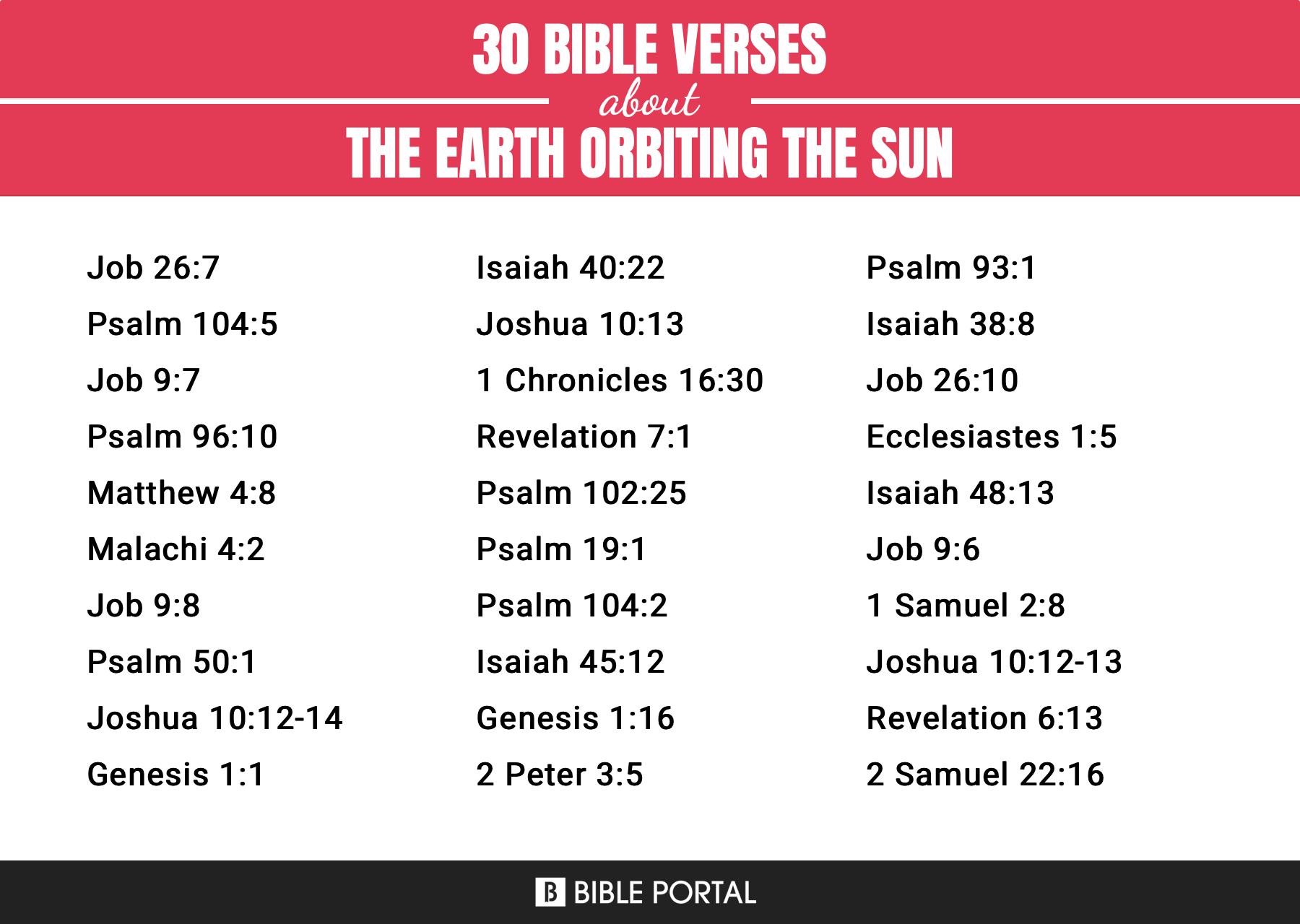
Have you ever wondered if the Bible explicitly states that the sun revolves around the Earth? This age-old question has sparked debates among theologians, scientists, and believers for centuries. In this blog post, we will delve into this topic to explore what the Bible actually says about the movement of the sun and the Earth, shedding light on the misconceptions that may exist around this issue.
By uncovering the truth behind whether the Bible suggests the sun revolves around the Earth, we can gain a deeper understanding of how ancient scriptures align with modern scientific knowledge. This exploration not only provides valuable insights into biblical interpretation but also encourages critical thinking and reflection on the intersection of faith and science. Join us on this enlightening journey as we unravel the mystery surrounding this intriguing question and discover the significance it holds in our understanding of the natural world and divine wisdom.
The Bible’s Perspective on the Solar System: Does it Support the Idea of the Sun Revolving Around the Earth?
According to the Bible, there are several verses that have been interpreted by some individuals as suggesting that the sun revolves around the Earth. However, it is important to note that these interpretations are based on a literal reading of the text and may not align with modern scientific understanding of the cosmos.
One such verse often cited in discussions on this topic is found in the book of Joshua, specifically Joshua 10:12-14. The passage describes Joshua commanding the sun and the moon to stand still during a battle, so that he could defeat his enemies. The verse reads, “The sun stood still, and the moon stopped, till the nation avenged itself on its enemies, as it is written in the Book of Jashar. The sun stopped in the middle of the sky and delayed going down about a full day.”
Another verse that is sometimes referenced is found in the book of Ecclesiastes, where it states, “The sun rises and the sun sets, and hurries back to where it rises” (Ecclesiastes 1:5). This verse, when taken literally, could be seen as supporting the idea of the sun revolving around the Earth.
However, it is important to consider that the Bible was written in ancient times, when people had a limited understanding of the universe and how it functions. The authors of the Bible used language and descriptions that reflected their perception of the natural world.
Modern science has since revealed that the Earth revolves around the sun, rather than the other way around. This discovery was a significant turning point in our understanding of the cosmos and has been confirmed through centuries of observation and scientific research.
Ultimately, while there are verses in the Bible that could be interpreted as suggesting a geocentric view of the universe, it is important to approach the text with an understanding of its historical and cultural context. The Bible should not be viewed as a scientific textbook, but rather as a collection of religious and moral teachings that are open to interpretation and reflection.
Did the Bible say the Sun revolves around earth?
No, the Bible does not explicitly state that the Sun revolves around the Earth. In fact, the heliocentric model of the solar system, where the Earth and other planets revolve around the Sun, was proposed by Nicolaus Copernicus in the 16th century. While there are passages in the Bible that describe the Sun moving across the sky, this is language used to describe the observable phenomenon from a human perspective. It’s important to interpret these passages in the context of ancient cosmology and understanding of the natural world at the time. The Bible is not a scientific textbook but rather a religious and moral guide.
What does the Bible say about earth and the Sun?
In the Bible, there are several references to the Earth and the Sun. One notable verse is found in Psalm 19:1-4 which states:
“The heavens declare the glory of God; the skies proclaim the work of his hands. Day after day they pour forth speech; night after night they reveal knowledge. They have no speech, they use no words; no sound is heard from them. Yet their voice goes out into all the earth, their words to the ends of the world.”
This passage highlights the magnificence of God’s creation, including the Earth and the Sun, as a testament to His glory and power. Additionally, in Ecclesiastes 1:5, it says:
“The sun rises and the sun sets, and hurries back to where it rises.”
This verse emphasizes the cyclical nature of the Sun’s movements, symbolizing the constancy and reliability of God’s creation. Overall, the Bible portrays the Earth and the Sun as integral parts of God’s design, reflecting His majesty and wisdom.
Does the Bible say that the earth is the center of the solar system?
The Bible does not explicitly state that the Earth is the center of the solar system. However, some people have interpreted certain passages to suggest a geocentric view of the universe. For example, in Psalm 104:5 it says, “He set the earth on its foundations; it can never be moved.” This has been used to support the idea that the Earth is stationary and at the center of everything.
It’s important to note that the Bible is not a scientific textbook, and its primary purpose is to convey spiritual and moral truths. The interpretation of cosmological ideas in the Bible should be done with caution and an understanding of the historical context in which it was written.
Is it wrong to say the Sun revolves around the earth?
In the context of the Bible, stating that the Sun revolves around the earth is not accurate. The Bible describes the Earth as being stationary and the Sun as moving across the sky, which was the common understanding at the time. However, from a scientific perspective, we now know that it is the Earth that revolves around the Sun. It’s important to interpret the Bible in its historical context while also considering scientific knowledge.