
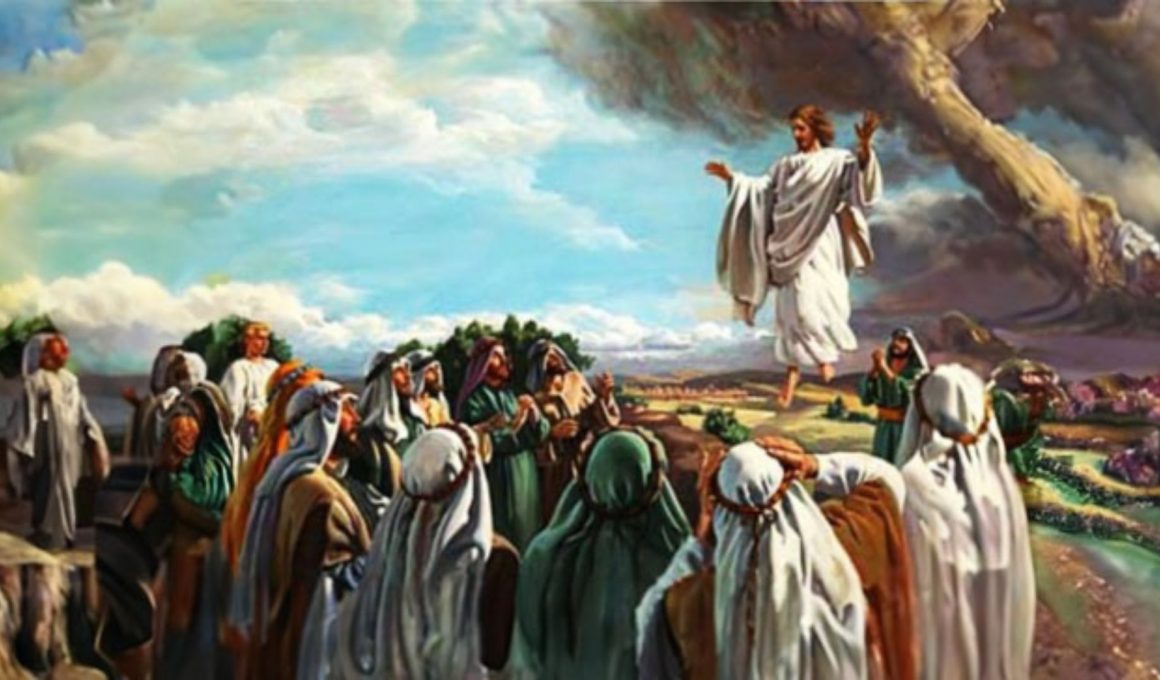
Have you ever wondered about the significance of the Great Commission in the Bible? Did you know that this key instruction from Jesus to spread the Gospel is actually mentioned multiple times throughout the Scriptures? In this blog post, we will explore the question: Is the Great Commission recorded 10 times in the Bible?
By delving into the various instances where the Great Commission appears in the Bible, we can gain a deeper understanding of its importance and implications for believers today. Understanding how this command is reiterated throughout different books of the Bible can provide us with fresh insights and perspectives on the mission that Jesus has entrusted to his followers. Join us on this journey as we uncover the rich tapestry of the Great Commission woven throughout the pages of Scripture.
Exploring the Great Commission: Tracking its Presence 10 Times in the Bible
The Great Commission, as recorded in the Bible, is a fundamental aspect of Christian faith and mission. It is the instruction given by Jesus to His disciples to go and make disciples of all nations, baptizing them in the name of the Father, the Son, and the Holy Spirit, and teaching them to obey everything He has commanded. This directive is found in various forms in the New Testament, emphasizing the importance of evangelism and spreading the message of salvation.
One may wonder if the Great Commission is specifically stated 10 times in the Bible. While the exact phrase “the Great Commission” may not be explicitly mentioned 10 times, the essence of the commission is indeed recorded multiple times throughout the New Testament. Here are some key passages where the Great Commission is articulated:
1. Matthew 28:19-20 (ESV) – “Go therefore and make disciples of all nations, baptizing them in the name of the Father and of the Son and of the Holy Spirit, teaching them to observe all that I have commanded you.”
2. Mark 16:15 (ESV) – “And he said to them, “Go into all the world and proclaim the gospel to the whole creation.”
3. Luke 24:47-49 (ESV) – “And that repentance for the forgiveness of sins should be proclaimed in his name to all nations, beginning from Jerusalem. You are witnesses of these things.”
4. John 20:21 (ESV) – “Jesus said to them again, ‘Peace be with you. As the Father has sent me, even so I am sending you.'”
5. Acts 1:8 (ESV) – “But you will receive power when the Holy Spirit has come upon you, and you will be my witnesses in Jerusalem and in all Judea and Samaria, and to the end of the earth.”
6. Romans 10:13-15 (ESV) – “For ‘everyone who calls on the name of the Lord will be saved.’ How then will they call on him in whom they have not believed? And how are they to believe in him of whom they have never heard? And how are they to hear without someone preaching?”
7. 1 Corinthians 9:16 (ESV) – “For if I preach the gospel, that gives me no ground for boasting. For necessity is laid upon me. Woe to me if I do not preach the gospel!”
8. 2 Corinthians 5:20 (ESV) – “Therefore, we are ambassadors for Christ, God making his appeal through us. We implore you on behalf of Christ, be reconciled to God.”
9. Ephesians 6:19-20 (ESV) – “Pray also for me, that words may be given to me in opening my mouth boldly to proclaim the mystery of the gospel, for which I am an ambassador in chains, that I may declare it boldly, as I ought to speak.”
10. 2 Timothy 4:1-2 (ESV) – “I charge you in the presence of God and of Christ Jesus, who is to judge the living and the dead, and by his appearing and his kingdom: preach the word; be ready in season and out of season; reprove, rebuke, and exhort, with complete patience and teaching.”
These passages collectively represent the heart of the Great Commission, urging believers to share the gospel message with boldness and urgency. The call to make disciples, proclaim the good news, and be witnesses for Christ resonates throughout the New Testament, underscoring the central role of evangelism in the Christian faith.
Is the Great Commission found in all four gospels?
No, the Great Commission is not found in all four gospels. The Great Commission is a term used to refer to Jesus’ instructions to his disciples to go and make disciples of all nations, baptizing them in the name of the Father, Son, and Holy Spirit, as recorded in Matthew 28:18-20. This specific commission is only found in the Gospel of Matthew. However, similar instructions or commissions are also recorded in different forms in the other gospels, such as in Mark 16:15, Luke 24:46-49, and John 20:21.
Where is the Great Commission listed in the Bible?
The Great Commission is listed in the Gospel of Matthew, Chapter 28, verses 16-20 in the Bible. This passage is where Jesus instructs his disciples to go and make disciples of all nations, baptizing them in the name of the Father, Son, and Holy Spirit, and teaching them to obey everything He commanded. It is a key passage in the Bible often cited as a central mission for Christians.
Who wrote the Great Commission in the Bible?
The Great Commission in the Bible was spoken by Jesus to his disciples before he ascended into heaven. This commandment to spread the gospel and make disciples of all nations is recorded in the Gospel of Matthew, Chapter 28, verses 18-20.
Why is the Great Commission different in Matthew and Mark?
The Great Commission is different in Matthew and Mark primarily in terms of the details included in each gospel account. In Matthew 28:19-20, Jesus instructs his disciples to “go and make disciples of all nations, baptizing them in the name of the Father and of the Son and of the Holy Spirit, and teaching them to obey everything I have commanded you.” This version emphasizes the global scope of the mission and the importance of baptism and teaching.
On the other hand, in Mark 16:15, Jesus simply tells his disciples to “Go into all the world and preach the gospel to all creation.” This version is more concise and focuses on the essential task of proclaiming the gospel message to all people.
While the core message of the Great Commission remains the same in both accounts, the emphasis and specific instructions provided by Jesus differ slightly between Matthew and Mark. Matthew highlights the comprehensive nature of making disciples through baptism and teaching, while Mark emphasizes the urgent call to preach the gospel to all creation. These variations reflect the unique perspectives and priorities of each gospel writer in conveying the teachings of Jesus.