
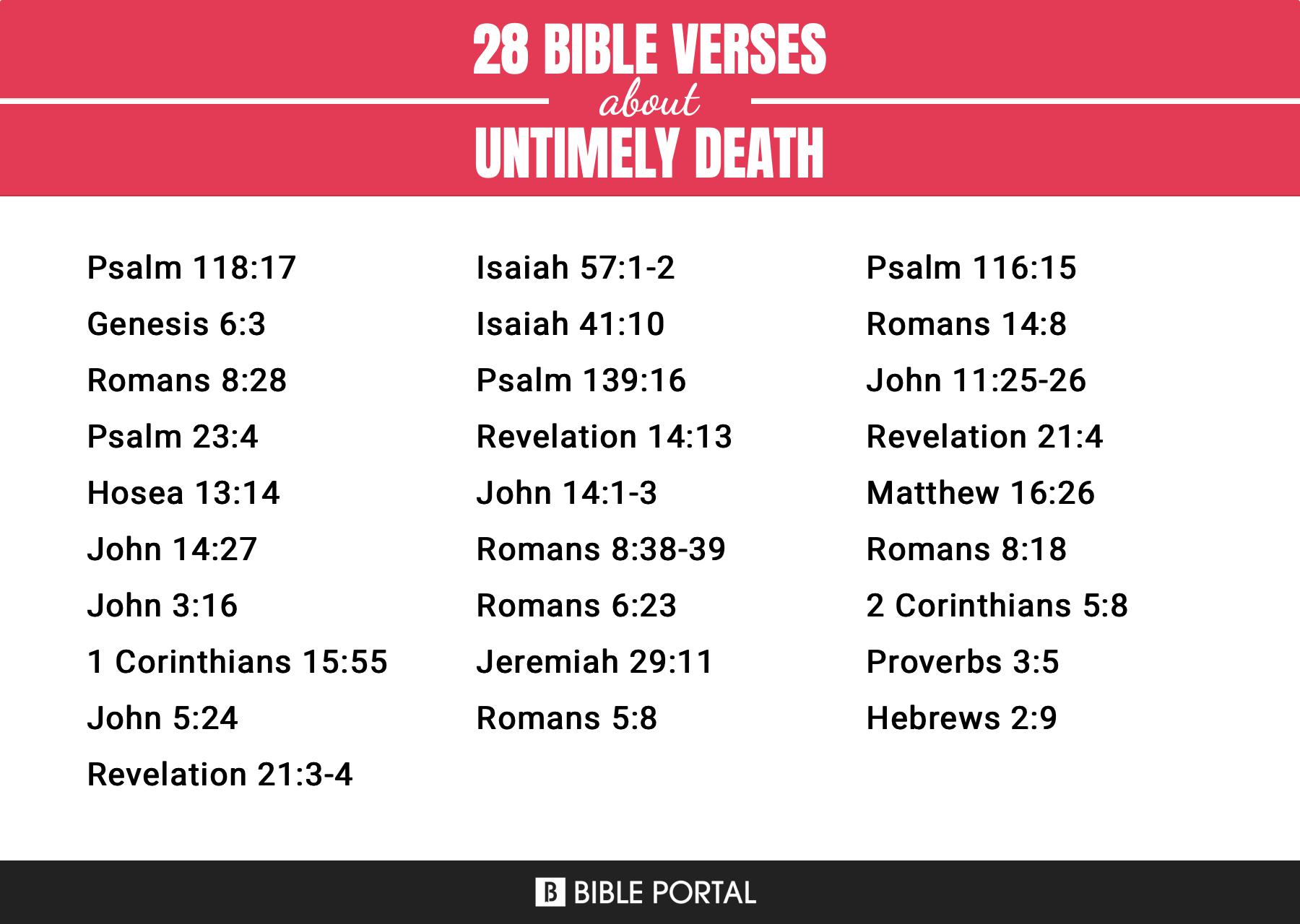
Have you ever wondered about the concept of untimely death as depicted in the Bible KJV? In this blog post, we will explore various instances of untimely death recorded in the King James Version of the Bible and delve into the lessons we can learn from these tragic events. By examining these stories, we can gain a deeper understanding of God’s sovereignty, the fragility of life, and the importance of living each day with purpose.
Through the exploration of untimely death in the Bible KJV, we have the opportunity to reflect on our own lives and consider how we can make the most of the time we have been given. These poignant narratives serve as powerful reminders to cherish our loved ones, to seek forgiveness and reconciliation, and to strive to live in accordance with God’s will. Join us as we uncover the profound truths hidden within these passages and discover how they can inspire us to live more intentionally and faithfully.
Exploring Untimely Deaths in the Bible: A KJV Perspective
The concept of untimely death is a recurring theme in the Bible, particularly in the King James Version (KJV). It refers to instances where individuals meet their demise at a moment that seems premature or unexpected. These occurrences serve as poignant reminders of the fragile and fleeting nature of human life, as well as the overarching sovereignty of God over all things.
One significant example of untimely death in the KJV is found in the story of King Saul. In 1 Samuel 31, we read about Saul’s tragic end on the battlefield, where he is mortally wounded by the Philistines. Despite his previous successes and shortcomings as a leader, Saul’s death can be seen as a culmination of divine judgment for his disobedience and rejection of God’s commands.
Another notable instance is the sudden death of Judas Iscariot in the New Testament. In Matthew 27, we learn that Judas, overwhelmed by guilt after betraying Jesus, takes his own life. This abrupt and tragic end serves as a stark reminder of the consequences of betrayal and the destructive power of sin.
Furthermore, the story of Absalom in 2 Samuel 18 offers a poignant illustration of untimely death. Absalom, despite his rebellion against his father David, meets a violent end during battle. This event underscores the complexities of familial relationships and the consequences of pride and ambition.
In each of these cases, untimely death serves as a powerful narrative device that highlights the transient nature of human existence and the ultimate authority of God over life and death. While these stories evoke feelings of sorrow and contemplation, they also challenge readers to reflect on the brevity of life and the importance of living in accordance with God’s will.
As we encounter these stories of untimely death in the Bible, we are invited to consider our own mortality and the choices we make in this fleeting life. May these narratives inspire us to seek wisdom, live with purpose, and ultimately place our trust in the eternal promises of God.
What does God say about untimely death?
In the Bible, God does not explicitly address the concept of untimely death. However, there are verses that suggest God has a plan and purpose for each person’s life, and that our days are numbered by Him. For example, Psalm 139:16 says, “Your eyes saw my unformed body; all the days ordained for me were written in your book before one of them came to be.”
Additionally, Ecclesiastes 3:1-2 tells us, “There is a time for everything, and a season for every activity under the heavens: a time to be born and a time to die.” While we may not understand why some deaths seem untimely to us, we can trust in God’s sovereignty and His ultimate plan for each individual.
It is important for believers to find comfort in the promise of eternal life and trust that God works all things together for good for those who love Him (Romans 8:28). This includes trusting Him even in the face of what we perceive as untimely death.
What Psalm is for untimely death?
Psalm 39 is often turned to in times of untimely death. It reflects on the brevity and frailty of life, expressing the author’s plea for God to make him aware of his mortality and the importance of living a life that honors God. The psalmist acknowledges that life is fleeting and requests God‘s forgiveness and protection in the face of death.
What does the Bible say about early death?
The Bible does not provide a specific answer to the question of why some people die at an early age. However, there are several verses that offer comfort and perspective on the issue.
1. Psalm 139:16 – “Your eyes saw my unformed body; all the days ordained for me were written in your book before one of them came to be.” This verse reminds us that God knows the number of our days, even if they seem short to us.
2. Ecclesiastes 7:17 – “Do not be overrighteous, neither be overwise—why destroy yourself?” This verse cautions against trying to understand or control everything, including the timing of death.
3. Isaiah 57:1-2 – “The righteous perish, and no one takes it to heart; the devout are taken away, and no one understands that the righteous are taken away to be spared from evil.” This passage suggests that sometimes early death may be a way for the righteous to be spared from future hardships or evil in the world.
Ultimately, the Bible encourages believers to trust in God’s sovereignty and wisdom, even when faced with the mystery of early death. It reminds us that our time on earth is temporary, and our ultimate hope is in the eternal life offered through Jesus Christ.
What is the prayer for untimely death?
In the context of the Bible, there is no specific prayer for untimely death. However, one of the prayers often used in times of distress or mourning is Psalm 23. This Psalm is a powerful reminder of God’s presence and comfort in difficult times. You can meditate on Psalm 23 and use it as a prayer for someone who is facing untimely death or for comfort in such situations.