
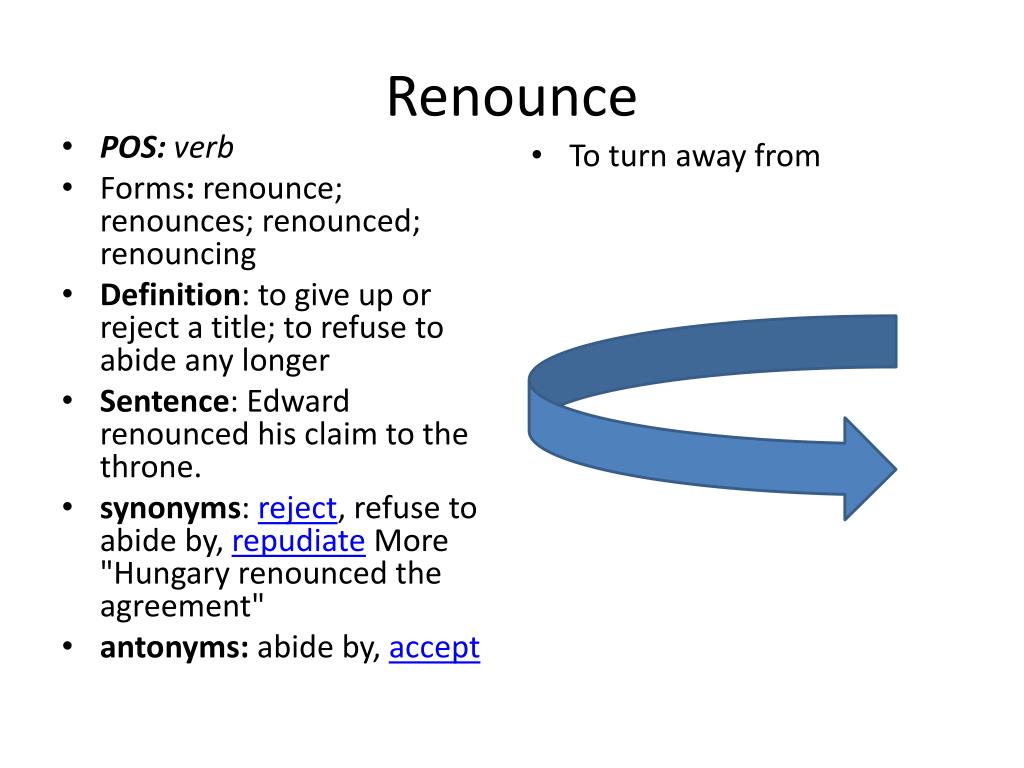
Have you ever come across the term “renounce” while reading the Bible and wondered what it truly means in a biblical context? Understanding the significance of this word can provide valuable insights into your faith journey and deepen your spiritual understanding. In the Bible, the concept of renouncing is often linked to letting go of worldly desires and embracing a life dedicated to serving God wholeheartedly.
Exploring the meaning of “renounce” in the Bible can lead to a greater awareness of the importance of personal sacrifice and obedience to God’s will. By delving into the biblical teachings on renunciation, you can learn how to align your actions and choices with God’s plan for your life, ultimately leading to a more fulfilling and purpose-driven existence. Join us as we uncover the depth of this term and discover how it can shape our faith journey in profound ways.
Exploring the Meaning of Renounce in the Bible: A Comprehensive Analysis
What Does Renounce Mean in the Bible
The concept of renouncing holds significant importance in the Bible, particularly in terms of one’s relationship with God and their commitment to following His will. To renounce something in the biblical context means to formally declare a rejection or abandonment of a belief, practice, or lifestyle that is contrary to the teachings of Scripture.
Renunciation is often associated with repentance and turning away from sin. In the New Testament, the apostle Paul frequently speaks about the need for believers to renounce their former ways and live according to the principles of the Gospel. This process of renunciation is symbolic of a spiritual rebirth and a commitment to living a life that is pleasing to God.
One of the most well-known verses that addresses the concept of renouncing is found in Matthew 16:24, where Jesus says, “If anyone would come after me, let him deny himself and take up his cross and follow me.” This verse underscores the idea that true discipleship requires a complete abandonment of self-centered desires and a willingness to surrender to God’s will.
Throughout the Bible, we see examples of individuals who have renounced their old ways in order to follow God wholeheartedly. The story of the prodigal son, for instance, illustrates the power of repentance and the transformative nature of renunciation. When the prodigal son decides to renounce his sinful lifestyle and return to his father, he is welcomed with open arms and restored to a place of honor within the family.
In addition to renouncing sin, the Bible also calls believers to renounce worldly values and ideologies that are in conflict with the kingdom of God. Romans 12:2 exhorts believers to “not be conformed to this world, but be transformed by the renewing of your mind.” This verse reminds us that true transformation begins with a deliberate choice to reject the standards of the world and embrace the truth of God’s Word.
Ultimately, the act of renouncing in the Bible is a powerful declaration of faith and obedience. It requires a conscious decision to turn away from anything that hinders our relationship with God and to fully commit ourselves to walking in His ways. By renouncing the things of this world, we make room in our hearts for the presence and power of God to work in and through us, leading to a life of greater purpose, joy, and fulfillment.
What does renounce mean spiritually?
Renounce spiritually in the context of the Bible refers to rejecting or turning away from sin, evil, or worldly temptations. It involves a conscious decision to abandon sinful behaviors or attitudes and to commit oneself to following God’s will and living according to His teachings. Renouncing can also involve a public declaration of faith or a formal renunciation of past beliefs or practices that are incompatible with one’s Christian faith. Ultimately, spiritual renunciation is about surrendering one’s own will and desires to align with God’s purposes and values.
What does renounced mean in the Bible?
In the Bible, the term “renounced” typically refers to someone publicly declaring their rejection or abandonment of a belief, claim, or association. This act is often accompanied by a formal declaration or statement. Renouncing something in the Bible is a serious and intentional decision to disassociate oneself from a particular belief or practice.
One notable biblical example of renouncing can be found in Matthew 10:33, where Jesus says, “But whoever denies me before men, I also will deny before my Father who is in heaven.” Here, the act of denying or renouncing Jesus is portrayed as a serious matter with significant consequences.
In a positive sense, individuals in the Bible may also renounce sin or evil as part of their repentance and turning back to God. Acts 3:19 states, “Repent therefore, and turn back, that your sins may be blotted out.” This turning away from sin involves a deliberate renunciation of sinful behaviors and a commitment to following God’s ways.
Overall, the concept of renouncing in the Bible carries deep spiritual and moral significance, emphasizing the importance of personal choice, conviction, and allegiance in the life of a believer.
What’s the difference between repent and renounce?
In the context of the Bible, the difference between repent and renounce lies in their meanings and implications.
- Repent refers to feeling remorse or regret for one’s sins or wrongdoings, and actively turning away from them. It involves acknowledging the wrongdoing, asking for forgiveness, and making a genuine effort to change one’s ways to align with God’s will.
- On the other hand, renounce means to formally reject or give up a belief, practice, or behavior. In a Biblical context, it often involves renouncing sinful behaviors or associations that are contrary to God’s teachings. Renouncing can be seen as a more deliberate and intentional act of turning away from something that goes against one’s faith.
Overall, while both repentance and renunciation involve turning away from sin, repentance focuses more on internal change and turning towards God, while renunciation emphasizes the public rejection or abandonment of sinful practices.
How to biblically renounce?
To biblically renounce something in the context of the Bible, you can follow these steps:
1. Identify: Clearly identify what it is that you want to renounce. It could be a sinful behavior, a harmful belief, or anything else that goes against God’s will.
2. Repent: Acknowledge your wrongdoing and sincerely repent for it. Ask God for forgiveness and commit to turning away from that behavior or belief.
3. Declare: Verbally declare your renunciation to God. You can do this through prayer, speaking aloud, or even writing it down. Be specific in what you are renouncing and why.
4. Break ties: Cut off any ties or influences that may be enabling or promoting the behavior or belief you are renouncing. This could include severing relationships, removing objects, or avoiding places that lead you astray.
5. Seek support: Surround yourself with a community of believers who can support you in your decision to renounce. Share your journey with them and ask for their prayers and encouragement.
6. Stay strong: Remember that renouncing something is a continual process. Stay strong in your faith, rely on God’s grace and strength, and continue to walk in obedience to His Word.
By following these steps, you can biblically renounce anything that is not aligned with God’s will for your life.