
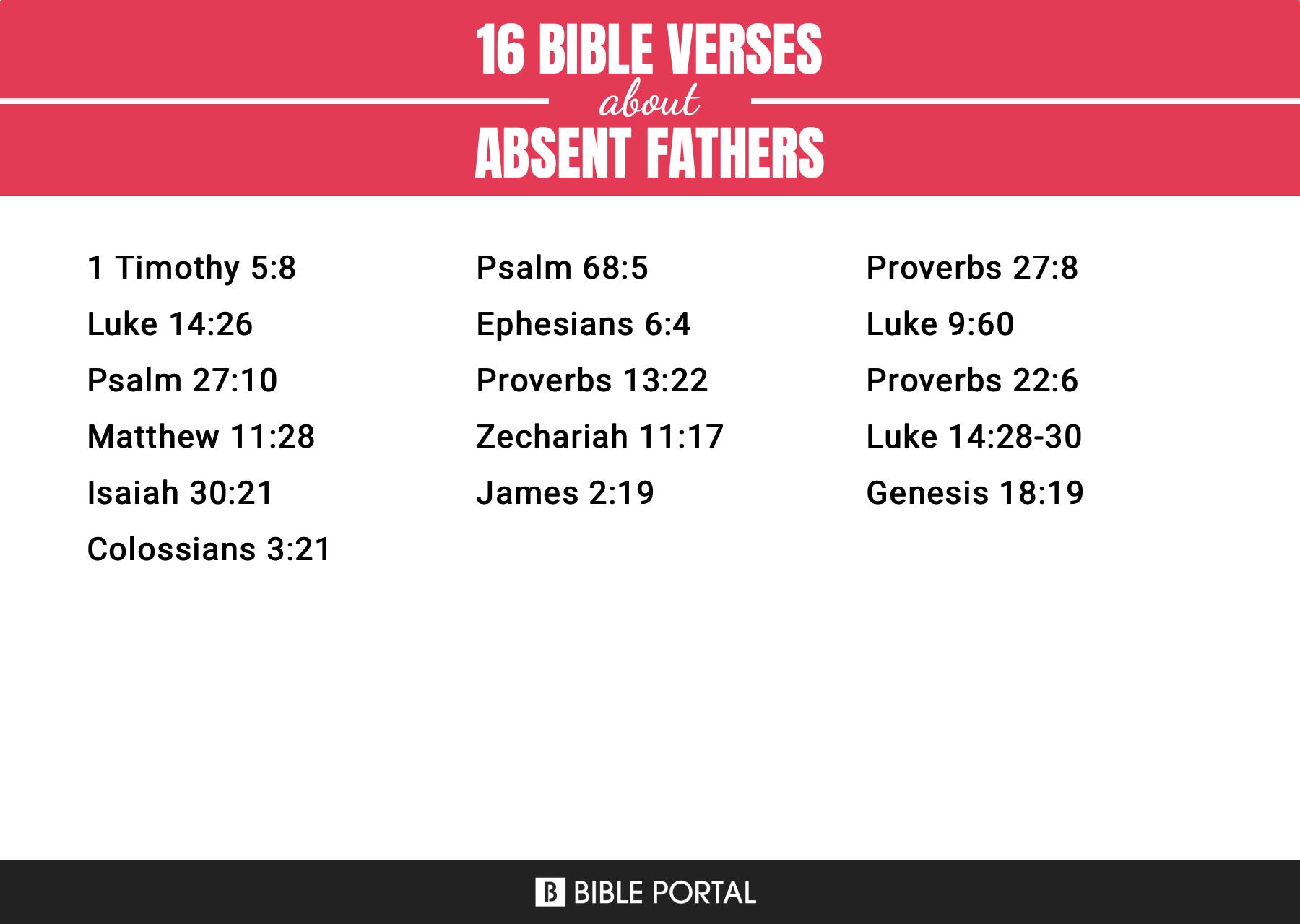
Have you ever wondered what the Bible has to say about the impact of fathers being absent in the lives of their children? In a world where fatherlessness is sadly becoming more common, it’s crucial to understand the biblical perspective on this issue and the potential consequences it may have on individuals and society as a whole. Exploring this topic not only sheds light on the importance of fatherhood according to the Word of God but also offers guidance on how we can address the challenges that arise when fathers are absent.
Throughout the pages of the Bible, we find verses and stories that emphasize the significant role that fathers play in the lives of their children. By delving into these passages, we can uncover valuable insights and wisdom that highlight the benefits of having a present and involved father figure. Understanding what the Bible says about fathers being absent can lead to a deeper appreciation for the importance of fatherhood and inspire us to support and uplift families in our communities.
The Biblical Perspective on Absent Fathers: Lessons and Guidance
Fathers play a crucial role in the lives of their children, providing love, guidance, and protection. However, when fathers are absent from their children’s lives, it can have profound effects on their physical, emotional, and spiritual well-being. In the Bible, there are several passages that address the importance of fathers being present in the lives of their children and the consequences of their absence.
One such passage is found in Ephesians 6:4, which states, “Fathers, do not provoke your children to anger, but bring them up in the discipline and instruction of the Lord.” This verse highlights the responsibility fathers have in raising their children in a way that honors God and fosters a healthy relationship between parent and child. When fathers are absent, children may struggle with feelings of anger, confusion, and insecurity.
Proverbs 20:7 also emphasizes the significance of a father in a child’s life, stating, “The righteous man walks in his integrity; his children are blessed after him.” This verse underscores the positive impact that a father who leads by example can have on his children, setting them up for blessings and success in their own lives. When fathers are absent, children may miss out on the wisdom, guidance, and support that a father figure can provide.
The Bible also warns against neglecting the needs of children, as seen in James 1:27, which says, “Religion that is pure and undefiled before God the Father is this: to visit orphans and widows in their affliction, and to keep oneself unstained from the world.” This verse highlights the importance of caring for those who are vulnerable and in need, including children who may be affected by the absence of a father figure in their lives.
Overall, the Bible emphasizes the critical role that fathers play in the lives of their children and the negative consequences that can arise when fathers are absent. It is important for fathers to be actively involved in the upbringing of their children, providing love, support, and guidance to help them thrive and grow into healthy, well-adjusted adults. By following the principles outlined in the Bible, fathers can make a positive impact on the lives of their children and help shape them into individuals who honor God and contribute positively to the world around them.
What does God say about an absent father?
In the Bible, God addresses the importance of fathers being present in their children’s lives. In Ephesians 6:4, it is stated, “Fathers, do not provoke your children to anger, but bring them up in the discipline and instruction of the Lord.” This emphasizes the role of fathers in nurturing and guiding their children in a loving and supportive manner. God values the presence of fathers in the family unit and encourages them to be actively involved in their children’s upbringing.
What does the Bible say about a father who abandons his child?
The Bible addresses the importance of a father’s role in the life of a child in several passages. In Ephesians 6:4, it says, “Fathers, do not provoke your children to anger, but bring them up in the discipline and instruction of the Lord.” This verse emphasizes the responsibility of parents, including fathers, to raise their children in a loving and nurturing environment.
Additionally, in 1 Timothy 5:8, it states, “But if anyone does not provide for his relatives, and especially for members of his household, he has denied the faith and is worse than an unbeliever.” This passage highlights the importance of a father’s duty to care for and support his family, including his children.
Overall, the Bible teaches that fathers have a significant role in the lives of their children and should not abandon or neglect them. It emphasizes the importance of love, care, and provision for one’s family as part of living out one’s faith.
Does God forgive absent fathers?
In the Bible, God is often portrayed as a loving and merciful Father who offers forgiveness to all who repent and seek reconciliation. The Bible teaches that God’s forgiveness is available to all who come to Him with a repentant heart, regardless of past mistakes or shortcomings. Therefore, absent fathers, like anyone else, can find forgiveness and redemption through God’s grace. It is important for absent fathers to acknowledge their mistakes, seek forgiveness from both God and their children, and make efforts to reconcile and rebuild relationships. God’s unconditional love and forgiveness are available to all who are willing to turn to Him in humility and faith.
What does the Bible say about children without fathers?
In the Bible, there are several passages that address the situation of children without fathers. One of the most well-known is found in Psalm 68:5 which states, “Father of the fatherless and protector of widows is God in his holy habitation.”
Another important verse is James 1:27, which says, “Religion that God our Father accepts as pure and faultless is this: to look after orphans and widows in their distress and to keep oneself from being polluted by the world.”
Additionally, in Deuteronomy 10:18, it is written, “He defends the cause of the fatherless and the widow, and loves the foreigner residing among you, giving them food and clothing.”
Overall, the Bible consistently emphasizes the importance of caring for and protecting children without fathers, along with widows and other vulnerable individuals, as part of living out one’s faith in a way that pleases God.