
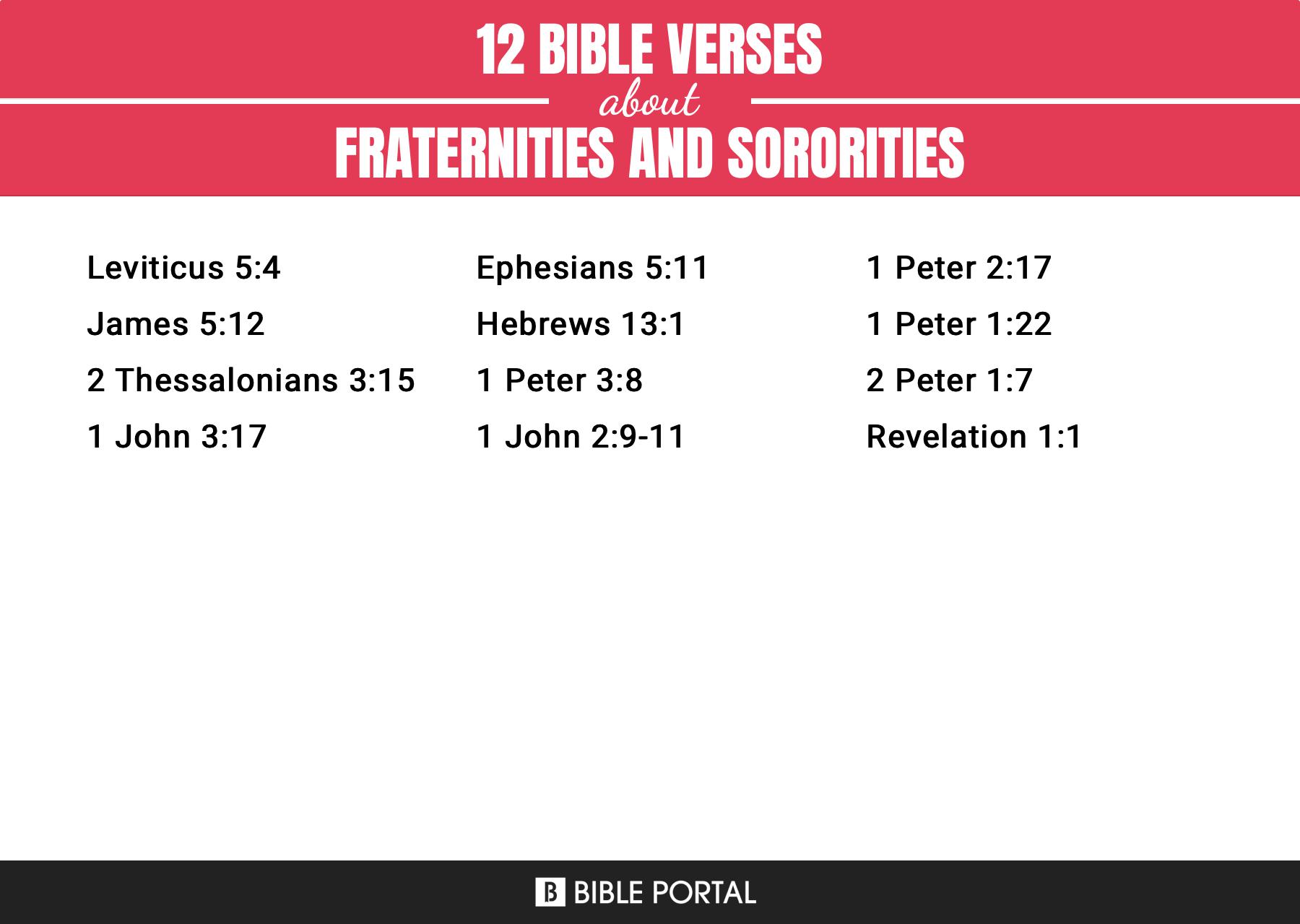
Have you ever wondered what the Bible has to say about fraternities? In today’s society, college fraternities are a common part of campus life, often associated with brotherhood, networking, and social events. But how does this concept align with biblical teachings? Let’s explore the topic and delve into what the Bible says about fraternities.
While fraternities can provide a sense of camaraderie and support for their members, it is important to examine their values and practices in light of biblical principles. The Bible emphasizes the importance of unity, love, and accountability among believers, which can certainly be beneficial aspects of fraternity life. By considering what the Bible has to say about fraternities, we can gain valuable insights into how to uphold positive and godly relationships within these organizations.
The Biblical Perspective on Brotherhood: Exploring the Concept of Fraternities in Scripture
Fraternities, also known as Greek letter organizations, are social groups found on many college campuses across the United States. These groups often involve rituals, traditions, and a strong sense of brotherhood or sisterhood among members. But what does the Bible have to say about fraternities?
One of the key principles emphasized in the Bible is the importance of community and fellowship among believers. In the book of Acts, we see how the early Christians gathered together, shared their possessions, and supported one another in love and unity. Acts 2:42-47 describes how they devoted themselves to the apostles’ teaching and to fellowship, breaking bread together and praying for each other.
However, when it comes to fraternities, there can be aspects that may conflict with biblical teachings. Some fraternities promote behaviors such as excessive drinking, hazing, or elitism, which can go against the principles of love, kindness, and humility that the Bible teaches.
The Bible also warns against the dangers of peer pressure and following the ways of the world. Romans 12:2 cautions us not to conform to the patterns of this world, but to be transformed by the renewing of our minds. This includes being wary of group mentalities that may lead us away from God’s will for our lives.
In addition, fraternities often involve secret rituals and oaths of loyalty, which can raise questions about transparency and honesty. The Bible encourages honesty and integrity in all our dealings, as seen in Ephesians 4:25, which says, “Therefore each of you must put off falsehood and speak truthfully to your neighbor, for we are all members of one body.”
Ultimately, the Bible does not explicitly mention fraternities or sororities as we know them today. However, it does provide guiding principles that can help us evaluate any group or organization we choose to be a part of. As Christians, we are called to seek fellowship that strengthens our faith, encourages us to live out our values, and honors God in all that we do.
What does the Bible say about being in a fraternity?
The Bible does not specifically mention fraternities or Greek organizations, as these are modern social constructs. However, the Bible does provide principles and guidelines that can be applied to participation in fraternity life.
One important aspect to consider is fellowship. The Bible encourages believers to have meaningful relationships with others and to build each other up (1 Thessalonians 5:11, Hebrews 10:24-25). It is important for individuals in a fraternity to seek positive and edifying relationships that align with biblical values.
Another aspect to consider is conduct and behavior. The Bible teaches that believers should conduct themselves with integrity, humility, and love towards others (Micah 6:8, Ephesians 4:2-3, Colossians 3:12-14). Individuals in a fraternity should strive to reflect these characteristics in their interactions with fellow members and the wider community.
Ultimately, each individual must prayerfully consider how their involvement in a fraternity aligns with their faith and values. It is important to seek guidance from scripture, prayer, and wise counsel when making decisions about participation in any organization.
What does the Bible say about spilling sperm to the ground?
In the Bible, spilling sperm to the ground is mentioned in the story of Onan in Genesis 38:9-10. Onan was instructed by his father Judah to fulfill the duty of a brother-in-law by having sexual relations with his brother’s widow to produce offspring for his deceased brother. However, Onan acted deceitfully and intentionally spilled his semen on the ground to avoid impregnating her. This act displeased God, and as a result, Onan was punished with death.
The specific verse in question is Genesis 38:9-10:
This passage is often interpreted as a warning against disobedience to God’s commands and the misuse of sexuality. It emphasizes the importance of honoring one’s obligations and responsibilities, including those related to procreation and family lineage.
What does the Bible say about fraternal orders?
The Bible does not specifically address fraternal orders by name. However, there are principles in the Bible that can be applied to the concept of fraternal orders. One such principle is found in Romans 12:10, which says, “Be devoted to one another in love. Honor one another above yourselves.” This verse highlights the importance of building strong, supportive relationships with others.
Additionally, Proverbs 27:17 states, “As iron sharpens iron, so one person sharpens another.” This verse emphasizes the benefits of fellowship and mutual encouragement among believers.
While fraternal orders themselves are not mentioned in the Bible, the principles of community, support, and encouragement that they often promote are consistent with biblical teachings on loving one another and building each other up in faith.
What does the Bible say about joining organizations?
The Bible does not specifically address joining organizations in a direct manner. However, there are some principles that can guide believers in making decisions about participating in organizations.
One key principle is found in 2 Corinthians 6:14, which advises believers not to be yoked with unbelievers. This can be applied to the idea of being closely associated with organizations that promote beliefs or values contrary to Christian teachings.
Additionally, in 1 Corinthians 10:31, believers are encouraged to do everything for the glory of God. This can serve as a guideline for evaluating whether joining a particular organization aligns with one’s commitment to living a life that honors and glorifies God.
Ultimately, each individual must prayerfully consider their involvement in organizations, seeking wisdom and discernment from God and guidance from the Holy Spirit. It is important to remember that our choices in joining organizations should reflect our identity as followers of Christ and contribute to spreading His message of love and redemption.