
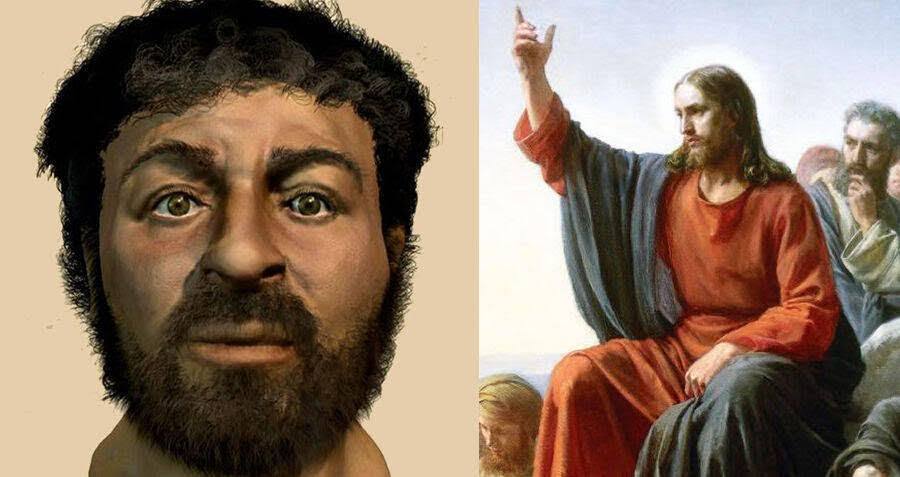
Have you ever wondered what the Bible says about pictures of Jesus? In a world where visual representations of Christ are commonplace, it’s important to delve into the Scriptures to understand the role of such images in our faith. This blog post explores the significance of pictures of Jesus according to biblical teachings and discusses how they can enhance our understanding and connection with Christ.
Understanding the biblical perspective on pictures of Jesus can provide us with valuable insights into the power of visual representations in shaping our spiritual life. By examining passages from the Bible and the historical context behind the use of such images, we can gain a deeper appreciation for the role they play in our worship and reflection. Join us on this exploration of what the Bible has to say about pictures of Jesus, and uncover the rich tapestry of meanings that these images hold for believers around the world.
Exploring the Biblical Perspective on Depicting Jesus in Images
Pictures of Jesus have been a topic of debate and discussion within the Christian community for centuries. While some Christians see them as a valuable tool for focusing their worship and devotion, others believe that creating images of Jesus goes against the teachings of the Bible. So, what does the Bible say about pictures of Jesus?
The first commandment in the Bible directly addresses the issue of idolatry: “Thou shalt not make unto thee any graven image or any likeness of anything that is in heaven above, or that is in the earth beneath, or that is in the water under the earth” (Exodus 20:4). This commandment is often cited by those who oppose the use of pictures of Jesus, as they believe it prohibits the creation of any visual representation of God or Jesus.
In the New Testament, the Apostle Paul warns against worshipping created things rather than the Creator: “For although they knew God, they neither glorified him as God nor gave thanks to him, but their thinking became futile and their foolish hearts were darkened. Although they claimed to be wise, they became fools and exchanged the glory of the immortal God for images made to look like mortal man and birds and animals and reptiles” (Romans 1:21-23).
On the other hand, some argue that pictures of Jesus can be a helpful aid for meditation and prayer, helping believers to visualize and connect with the person of Jesus in a more personal way. They point to passages in the Bible that describe Jesus’ physical appearance, such as Isaiah 53:2, which states that “he had no beauty or majesty to attract us to him, nothing in his appearance that we should desire him.”
Ultimately, the Bible does not explicitly forbid the use of pictures of Jesus. Instead, it emphasizes the importance of worshiping God alone and avoiding the temptation to replace the true God with created images. Whether or not to use pictures of Jesus is a matter of personal conviction and interpretation of Scripture, and Christians should approach this issue with prayerful consideration and respect for differing viewpoints.
Is it okay to have pictures of Jesus?
In the context of the Bible, the question of whether it is okay to have pictures of Jesus is a matter of personal belief and interpretation. The Bible does not explicitly address the issue of portraying Jesus in images. Some Christian denominations view the creation and display of pictures of Jesus as a way to honor and remember him, while others may consider it inappropriate or even idolatrous. Ultimately, the decision to have pictures of Jesus is a personal one that should be made prayerfully and in line with one’s own convictions and beliefs.
What does the Bible say about the image of Jesus?
In the Bible, there is no direct physical description of Jesus’ appearance. However, there are some verses that allude to His image. One of the most well-known descriptions is found in Isaiah 53:2, which says, “He had no beauty or majesty to attract us to him, nothing in his appearance that we should desire him.” This suggests that Jesus did not have a striking physical appearance that would draw people to Him.
Additionally, in the New Testament, Colossians 1:15 describes Jesus as “the image of the invisible God,” emphasizing His divine nature rather than His physical attributes.
It is important to note that while the Bible does not provide a detailed description of Jesus’ physical appearance, the focus is always on His teachings, His actions, and His ultimate sacrifice for humanity rather than His external image.
How does the Bible describe Jesus image?
In the Bible, Jesus is described as the image of the invisible God (Colossians 1:15). He is also referred to as the Son of God and the Word made flesh (John 1:14). Jesus is described as compassionate, loving, merciful, just, and humble throughout the New Testament. His physical appearance is not explicitly described in detail in the Bible, but he is often depicted with characteristics such as gentleness, kindness, and wisdom.
What does the Bible say about not having pictures of Jesus?
The Bible does not explicitly forbid not having pictures of Jesus. However, it is important to note the second commandment in Exodus 20:4-5 which states, “You shall not make for yourself an image in the form of anything in heaven above or on the earth beneath or in the waters below. You shall not bow down to them or worship them; for I, the Lord your God, am a jealous God.”
This commandment has been interpreted by some to mean that creating images or representations of God, including Jesus, could potentially lead to idolatry or false worship. Therefore, some Christian traditions choose not to depict Jesus in art or imagery out of respect for this interpretation of the commandment.
Ultimately, the decision to have pictures of Jesus is a matter of personal conviction and interpretation of scripture. It is important for individuals to prayerfully consider their beliefs and respect the diversity of perspectives within the Christian faith.