
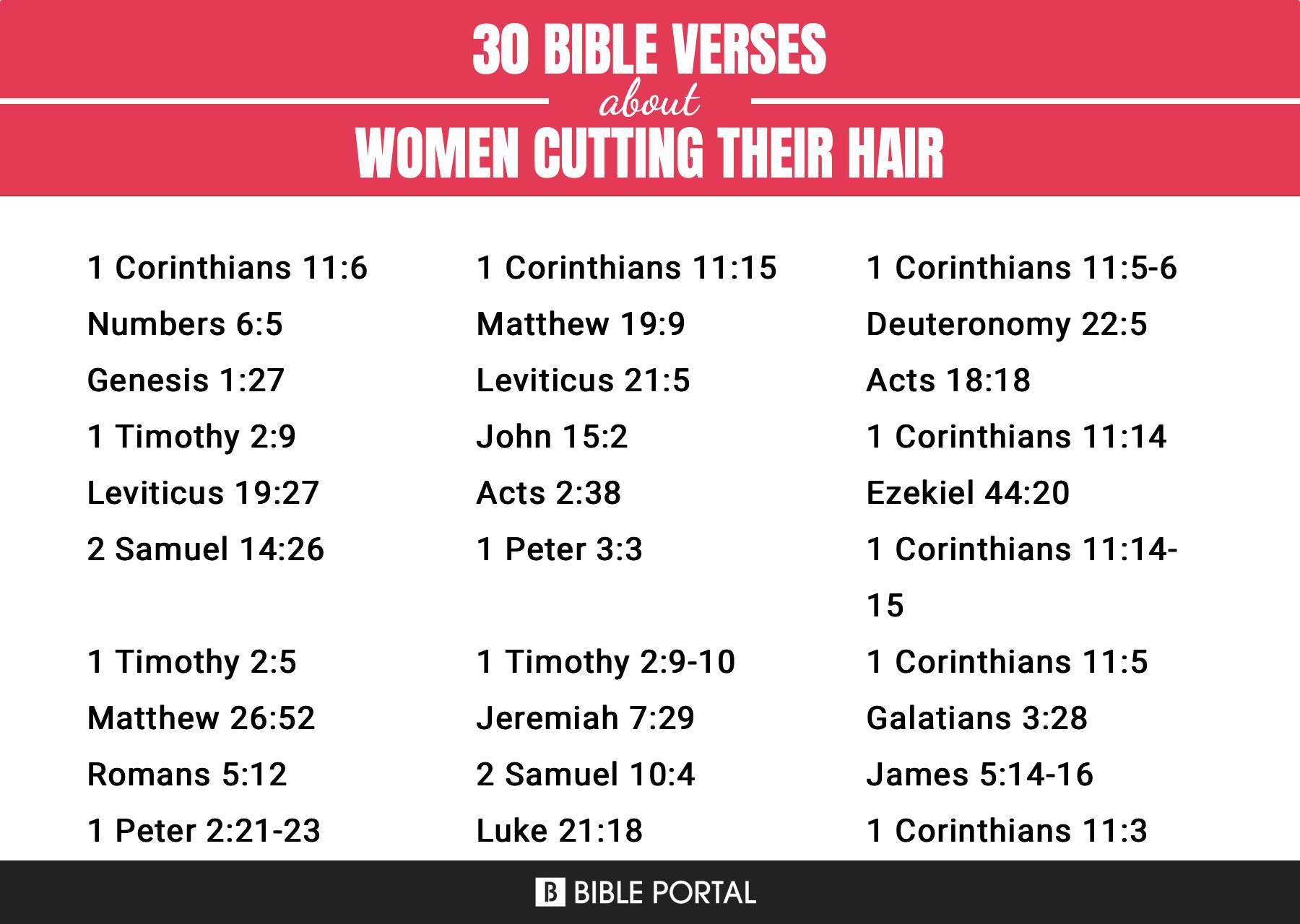
Have you ever wondered what the Bible says about a woman cutting her hair? In this blog post, we will explore this intriguing topic and uncover the biblical perspective on whether it is permissible or not. Understanding this aspect of scripture can provide valuable insights into cultural norms, personal identity, and spiritual significance for women who are curious about this practice.
Delving into what the Bible says about a woman cutting her hair can offer clarity and guidance for those seeking to align their beliefs and actions with biblical principles. By examining relevant scriptures, historical context, and interpretations from various theologians, we aim to shed light on this often-debated topic and equip readers with a deeper understanding of how to approach this issue in a thoughtful and informed manner. Stay tuned as we dive into this fascinating discussion and uncover the wisdom that the Bible has to offer on this matter.
The Biblical Perspective on Women and Haircutting: Understanding the Scriptures’ Guidance
The Bible has references to women cutting their hair, and the topic is often a subject of debate among theologians and believers. Some argue that the act of a woman cutting her hair is a matter of personal choice and cultural norms, while others believe that there are specific teachings in the Bible regarding this practice.
One of the most well-known passages related to women cutting their hair is found in 1 Corinthians 11:5-6, which states: “But every woman who prays or prophesies with her head uncovered dishonors her head—it is the same as having her head shaved. For if a woman does not cover her head, she might as well have her hair cut off; but if it is a disgrace for a woman to have her hair cut off or her head shaved, then she should cover her head.”
This passage is often interpreted in different ways, but some believe that it suggests that a woman’s long hair is given to her as a covering and that cutting it short would go against the natural order established by God. In this interpretation, cutting a woman’s hair short would symbolize a rejection of her God-given role and authority.
Another passage that is sometimes referenced in discussions about women cutting their hair is found in 1 Corinthians 11:15, which states: “but if a woman has long hair, it is her glory? For long hair is given to her as a covering.” Some interpret this verse to suggest that long hair is a symbol of a woman’s beauty and femininity, and cutting it short could be seen as going against this symbolism.
However, it is important to note that interpretations of these passages can vary widely among different Christian denominations and scholars. Some believe that these teachings were specific to the cultural context of the time and may not apply directly to modern practices of hair-cutting.
Ultimately, the decision of whether a woman should cut her hair or not is a personal one that should be guided by her understanding of scripture, prayer, and seeking wisdom from trusted spiritual advisors. As with many issues in the Bible, interpretation and application of these teachings may vary, and it is important for individuals to seek their own understanding and relationship with God on this matter.
What does it mean spiritually when a woman cuts her hair?
In the Bible, cutting a woman’s hair can have different spiritual meanings depending on the context. One common interpretation is that cutting a woman’s hair can symbolize a form of humility or submission. In 1 Corinthians 11:6, it mentions that if a woman does not cover her head, she should cut her hair, and if it is a disgrace for a woman to have her hair cut or shaved off, she should cover her head. This passage highlights the idea of women showing respect for authority and order in the church.
On the other hand, in the story of Samson and Delilah in Judges 16, cutting Samson’s hair symbolized a loss of strength and power. Samson’s long hair was a sign of his consecration to God, and when Delilah deceitfully cut his hair, he lost his physical strength as a result.
Overall, the act of cutting a woman’s hair can carry different symbolic meanings in the Bible, such as humility, submission, consecration, or loss of strength, depending on the specific context in which it is mentioned.
Is it biblical for a woman to shave her hair?
In the Bible, 1 Corinthians 11:6 addresses the issue of women shaving their hair. The verse states, “For if a woman does not cover her head, she might as well have her hair cut off; but if it is a disgrace for a woman to have her hair cut off or her head shaved, then she should cover her head.” This verse suggests that in the cultural context of the time, it was seen as shameful for a woman to have her hair cut short or shaved. However, it is important to note that this verse is often interpreted in different ways and may not necessarily apply in the same manner in contemporary society. Ultimately, whether or not a woman should shave her hair is a personal decision and should be guided by her own convictions and beliefs.
What does the Bible say about a woman cutting her hair kjv?
In the King James Version (KJV) of the Bible, 1 Corinthians 11:6 discusses the issue of a woman cutting her hair. The verse states: “For if the woman be not covered, let her also be shorn: but if it be a shame for a woman to be shorn or shaven, let her be covered.”
This verse is often interpreted to mean that women should have long hair as a symbol of their submission and modesty. It suggests that if a woman chooses to cut her hair short or shave it off, she should also cover her head as a sign of respect and propriety.
However, interpretations of this passage can vary among different Christian denominations and individual believers. Some may view it as a cultural or contextual instruction specific to the time and place in which it was written, while others may see it as a timeless principle with spiritual significance.
What does it mean when a woman cuts her hair?
In the context of the Bible, when a woman cuts her hair, it can have different meanings, depending on the specific passage or cultural context. One notable reference is found in 1 Corinthians 11:6, where Paul instructs women to cover their heads while praying or prophesying, emphasizing the symbolism of long hair as a covering or glory for a woman. Cutting one’s hair in this context could signify a rejection of this symbol of submission and humility before God. It may also be associated with mourning or shame in other biblical narratives. Ultimately, the significance of a woman cutting her hair in the Bible can vary based on the cultural, theological, and historical context of the passage in question.