
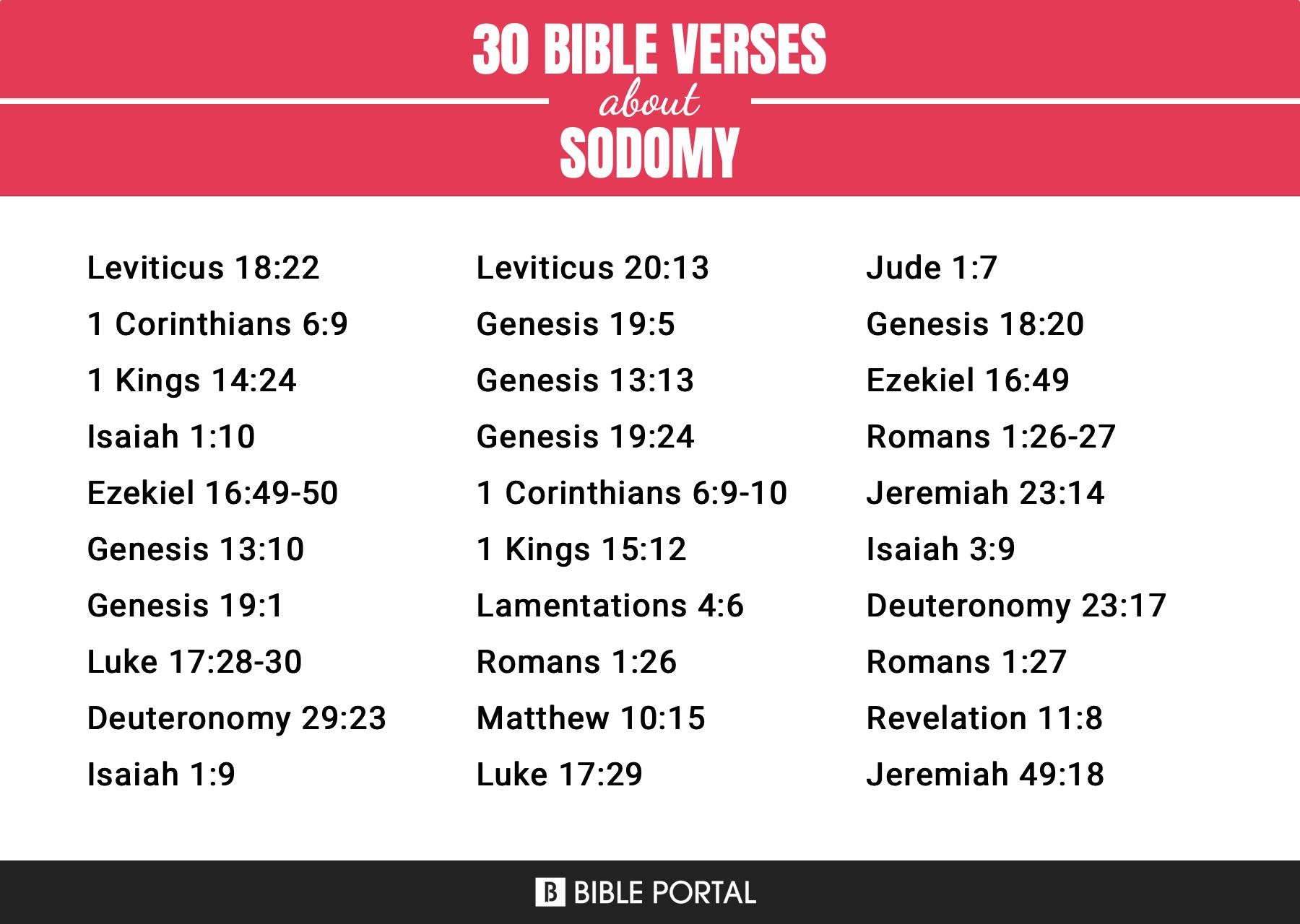
Have you ever wondered what the Bible says about sodomy? This controversial topic has been debated for centuries, with varying interpretations and beliefs. In this blog post, we will explore the biblical perspective on sodomy and uncover the truths hidden within the scriptures.
By delving into what the Bible has to say about sodomy, we can gain a deeper understanding of the moral principles and values that guide our lives. Whether you are approaching this topic from a religious standpoint or simply seeking knowledge, exploring the teachings of the Bible can offer insight and clarity on this complex issue. Join us on this journey as we examine the significance of sodomy in the context of biblical teachings and discover the timeless wisdom it holds.
Understanding the Bible’s Perspective on Sodomy
What the Bible Says About Sodomy
The topic of sodomy is one that has been a subject of debate and discussion for centuries, particularly within religious contexts. In the Bible, the term “sodomy” is often associated with the story of Sodom and Gomorrah in the book of Genesis. This story describes the destruction of the cities of Sodom and Gomorrah by God due to the rampant wickedness and sinfulness of their inhabitants.
One of the main reasons cited for the destruction of Sodom and Gomorrah is the prevalence of sexual immorality, including homosexual acts. This has led many to interpret the story as a condemnation of homosexuality and same-sex relationships. The term “sodomy” itself is often used to refer to sexual acts that are considered unnatural or immoral, particularly those involving anal intercourse.
In the Old Testament, there are several references to sexual sins, including Leviticus 18:22 which states, “You shall not lie with a male as with a woman; it is an abomination.” This verse is often interpreted as a prohibition against homosexual relationships. Similarly, in the New Testament, the apostle Paul condemns homosexual behavior in his letter to the Romans, describing it as “unnatural” and a result of turning away from God.
However, it is important to note that interpretations of these passages vary among different Christian denominations and scholars. Some argue that the Bible’s passages on sodomy should be understood in their historical and cultural context, and that the modern understanding of homosexuality is not necessarily condemned in the same way.
Ultimately, the question of what the Bible says about sodomy is a complex and contentious issue that continues to be debated among Christians and scholars alike. While some interpret the Bible as condemning homosexual acts as a form of sodomy, others emphasize love, acceptance, and inclusivity as central tenets of Christian faith. This ongoing debate underscores the diversity of interpretations within Christianity and the need for respectful dialogue on challenging and sensitive topics.
What is the most sinful act in the Bible?
In the context of the Bible, one of the most sinful acts is murder. This is evident from the very beginning with the story of Cain and Abel (Genesis 4:1-16), where Cain murders his brother out of jealousy. The act of taking another person’s life is considered a grave sin in the Bible and goes against one of the Ten Commandments – “Thou shalt not kill” (Exodus 20:13). Throughout the Bible, murder is consistently condemned and is seen as a violation of God’s commandments and the sanctity of human life.
Is it a sin to waste sperm in the Bible?
In the Bible, wasting sperm or ejaculating outside of sexual intercourse within marriage is often referred to in the context of “spilling seed.” This concept is found in the story of Onan in Genesis 38:8-10. Onan was instructed to fulfill his duty to provide an heir for his deceased brother by impregnating his brother’s widow. However, Onan “spilled his seed on the ground” instead of impregnating her. The Bible portrays this act as displeasing to God, and as a result, Onan was punished with death.
While this specific case does not directly address modern concepts of waste, many interpret it as a general principle against purposefully wasting sperm outside of the divinely sanctioned context of marital relations. It is important to note that interpretations may vary among different Christian denominations and scholars.
Ultimately, whether or not wasting sperm is considered a sin in the Bible is subject to interpretation and theological debate.
What was the sin of Sodom in scripture?
In the Bible, the sin of Sodom is often associated with inhospitality and wickedness. The most infamous story related to Sodom is found in Genesis 19, where two angels visit Lot in the city. The men of Sodom surround Lot’s house and demand to have sexual relations with the angels. This display of wickedness and lack of hospitality towards the visitors led to the eventual destruction of Sodom and Gomorrah by fire and brimstone as a punishment from God. This event serves as a warning against sinful behavior and the consequences of turning away from God.