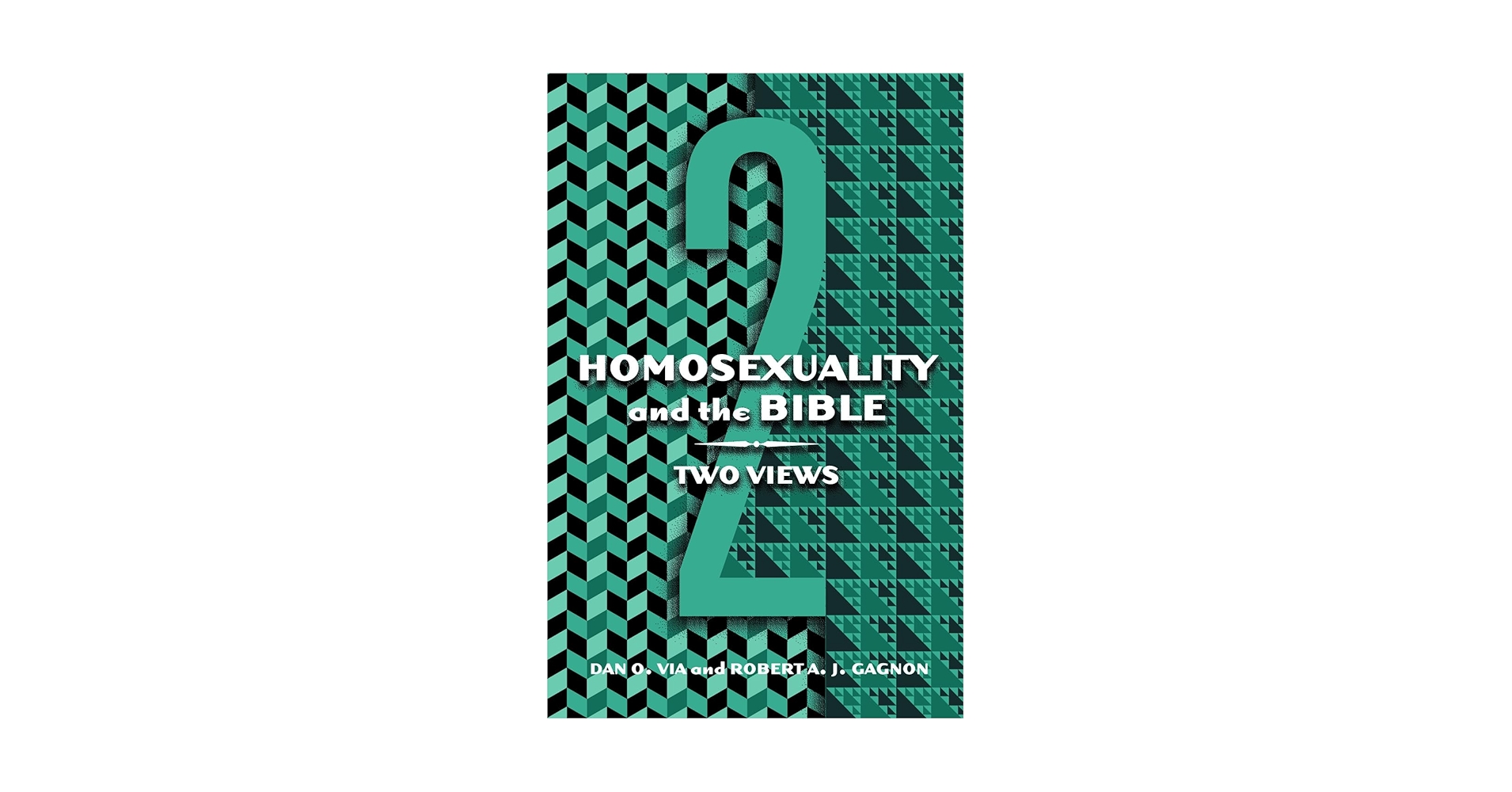
Have you ever wondered what the Bible says about homosexuality? In this thought-provoking blog post, we will explore two contrasting views on this complex and sensitive topic. By examining different perspectives, we aim to foster understanding and respectful dialogue within the broader discussion of faith and sexuality.
Delving into the intersection of LGBTQ+ issues and biblical teachings can be challenging, but it offers a valuable opportunity for introspection and growth. Whether you approach the subject from a traditional or more progressive standpoint, this exploration promises to expand your knowledge and deepen your appreciation for the diverse interpretations of scripture. Join us as we navigate the nuanced conversations surrounding homosexuality and the Bible, with the goal of promoting empathy and unity in the midst of differing beliefs.
Exploring Two Perspectives on Homosexuality in the Bible
Homosexuality and the Bible: 2 Views
When it comes to the topic of homosexuality in the context of the Bible, there are generally two main viewpoints held by different Christian denominations and scholars. On one hand, there are those who interpret the Bible as condemning homosexuality as a sin, while on the other hand, there are those who argue for a more inclusive and affirming understanding of LGBTQ+ individuals within the Christian community.
1. Traditional View
The traditional view, held by many conservative Christians, interprets certain passages in the Bible as explicitly condemning homosexual behavior. Key verses often cited include Leviticus 18:22 (“You shall not lie with a male as with a woman; it is an abomination”) and Romans 1:26-27 (“For this reason God gave them up to dishonorable passions. For their women exchanged natural relations for those that are contrary to nature; and the men likewise gave up natural relations with women and were consumed with passion for one another, men committing shameless acts with men and receiving in themselves the due penalty for their error”).
Supporters of the traditional view argue that these passages clearly indicate that homosexual behavior is sinful and goes against God’s intended design for human relationships. They believe that the Bible’s teachings on sexuality are applicable for all time and should not be reinterpreted based on modern cultural norms.
2. Inclusive View
On the other hand, proponents of the inclusive view argue for a more nuanced and contextual understanding of the Bible’s teachings on homosexuality. They contend that the cultural and historical context in which the biblical texts were written must be taken into account when interpreting passages related to LGBTQ+ individuals.
Supporters of the inclusive view often point out that the Bible also contains passages that have been used to justify slavery, the subjugation of women, and other forms of discrimination that are now widely rejected by society. They emphasize the importance of love, compassion, and acceptance within the Christian community, regardless of sexual orientation or gender identity.
One of the key arguments made by those who support the inclusive view is that Jesus’ teachings prioritize love and acceptance above all else. They point to examples in the Gospels where Jesus associates with marginalized and outcast members of society, showing compassion and grace rather than condemnation.
In conclusion, the debate over homosexuality and the Bible is complex and multifaceted, with passionate arguments on both sides. Ultimately, how one interprets the Bible’s teachings on this issue often depends on their theological beliefs, cultural background, and personal experiences. As Christians continue to grapple with questions of sexuality and inclusion, it is essential to approach these discussions with empathy, humility, and a commitment to understanding diverse perspectives within the faith community.
What does the New Testament say about homosexuality?
The New Testament addresses homosexuality in a few passages. One of the key verses is found in the book of Romans (1:26-27), where Paul describes homosexual activity as unnatural. The passage states, “Because of this, God gave them over to shameful lusts. Even their women exchanged natural sexual relations for unnatural ones. In the same way the men also abandoned natural relations with women and were inflamed with lust for one another. Men committed shameful acts with other men, and received in themselves the due penalty for their error.”
Another important passage is found in 1 Corinthians (6:9-10), where Paul lists various sins that will prevent people from inheriting the kingdom of God. The text includes “Or do you not know that wrongdoers will not inherit the kingdom of God? Do not be deceived: Neither the sexually immoral nor idolaters nor adulterers nor men who have sex with men nor thieves nor the greedy nor drunkards nor slanderers nor swindlers will inherit the kingdom of God.”
It’s worth noting that interpretations of these verses can vary among different Christian denominations and scholars. Some may argue for a more inclusive view, while others adhere strictly to a traditional understanding of these passages.
Where did homosexuality begin in human history?
In the context of the Bible, the story of homosexuality is often linked back to the cities of Sodom and Gomorrah in the book of Genesis. According to the biblical account in Genesis 19, the men of Sodom wanted to have sexual relations with two male angels who were visiting Lot. This act was condemned by God, and as a result, Sodom and Gomorrah were destroyed by fire and brimstone as a punishment for their wickedness.
While the story of Sodom and Gomorrah is often cited in discussions about homosexuality in the Bible, it is essential to note that the concept of homosexuality as a sexual orientation or identity did not exist in the same way during biblical times as it does today. The Bible also contains other passages that address same-sex behavior, such as Leviticus 18:22 and Romans 1:26-27, which are used by some to argue against homosexuality.
Overall, interpretations of the Bible’s stance on homosexuality vary among different Christian denominations and scholars, and it continues to be a topic of debate and discussion within religious communities.
What are the three types of homosexuality?
In the context of the Bible, there are three types of homosexuality that are often discussed:
1. Cultural Homosexuality: This refers to the acceptance and normalization of homosexual behavior within a specific culture or society, even if it goes against traditional biblical teachings.
2. Temperamental Homosexuality: Some individuals may have a natural inclination towards same-sex attraction due to various factors such as genetics, upbringing, or personal experiences. This type of homosexuality is often seen as a part of a person’s inherent temperament.
3. Conscious Homosexuality: This type of homosexuality involves individuals who consciously choose to engage in homosexual behavior, regardless of societal norms or religious beliefs that may condemn it. They may embrace and celebrate their same-sex attractions openly.
What does the Bible say about dating the same gender?
The Bible addresses same-gender relationships in a few key passages. In the Old Testament, Leviticus 18:22 states: “Do not have sexual relations with a man as one does with a woman; that is detestable.” Similarly, Leviticus 20:13 says: “If a man has sexual relations with a man as one does with a woman, both of them have done what is detestable. They are to be put to death; their blood will be on their own heads.”
In the New Testament, Romans 1:26-27 also references same-sex relations: “Because of this, God gave them over to shameful lusts. Even their women exchanged natural sexual relations for unnatural ones. In the same way the men also abandoned natural relations with women and were inflamed with lust for one another. Men committed shameful acts with other men, and received in themselves the due penalty for their error.”
Overall, the Bible is clear that homosexual behavior is considered sinful according to Christian teachings. However, it is important to approach this topic with love, compassion, and understanding towards all individuals, regardless of their sexual orientation or beliefs.