
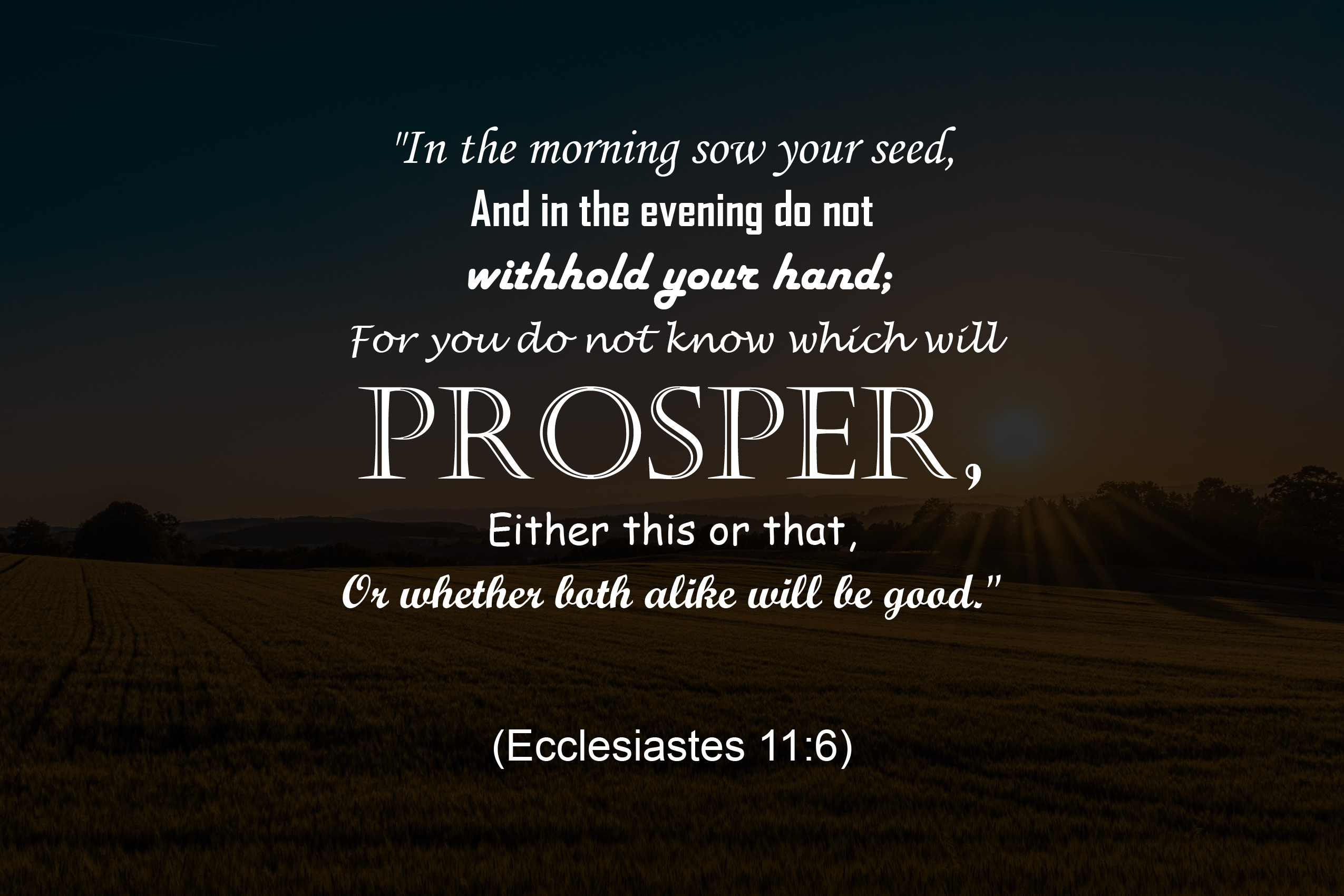
Have you ever considered the immense power of seed sowing as portrayed in the Bible? The act of planting a small seed and witnessing it grow into something fruitful and abundant holds profound spiritual significance that transcends mere agricultural practice. In the scriptures, the concept of seed sowing is often used as a metaphor for sharing God’s word, investing in relationships, and fostering spiritual growth.
The Bible teaches us that every seed sown carries the potential to yield a harvest beyond our imagination. When we sow seeds of kindness, love, and faith, we are participating in God’s divine plan of multiplication and blessings. The simple act of sowing seeds, whether it be through acts of generosity, words of encouragement, or sharing the gospel, can lead to a transformation in our lives and the lives of those around us. Join us as we explore the profound impact of seed sowing in the Bible and discover the remarkable benefits it brings to our spiritual journey.
Sowing Seeds of Faith: Unleashing the Transformative Power Found in the Bible
Seed sowing is a powerful concept that is frequently mentioned throughout the Bible. It symbolizes the act of planting something small but significant, with the expectation that it will grow and bear fruit in due time. This principle is not limited to agriculture; it also applies to various aspects of our lives, including our actions, words, and even our faith.
In the New Testament, Jesus often used parables involving seeds to teach his disciples and the crowds about the kingdom of God. In the Parable of the Sower (Matthew 13:1-23), for example, Jesus compares the different responses to the seed (the word of God) being sown on different types of soil. The good soil represents those who hear the word, understand it, and bear fruit, while the rocky ground and thorny soil symbolize those who are unable to produce fruit due to various obstacles.
Similarly, in the Gospel of Mark (Mark 4:26-29), Jesus tells the Parable of the Growing Seed, illustrating the mysterious process of growth that occurs when a farmer scatters seed on the ground. The farmer goes about his daily routine, trusting that the seed will sprout and grow, even though he does not fully understand how it happens. This parable highlights the importance of faith and patience in the process of seed sowing.
In the letters of Paul, the apostle uses agricultural imagery to emphasize the principle of seed sowing in a spiritual context. In Galatians 6:7-9, Paul writes, “Do not be deceived: God cannot be mocked. A man reaps what he sows. Whoever sows to please their flesh, from the flesh will reap destruction; whoever sows to please the Spirit, from the Spirit will reap eternal life. Let us not become weary in doing good, for at the proper time we will reap a harvest if we do not give up.” This passage underscores the idea that our actions have consequences, and we will eventually reap what we sow, whether in a positive or negative sense.
The book of Proverbs is also rich in wisdom concerning seed sowing. In Proverbs 11:24-25, it states, “One person gives freely, yet gains even more; another withholds unduly, but comes to poverty. A generous person will prosper; whoever refreshes others will be refreshed.” This proverb highlights the principle of generosity and the blessings that come from sowing seeds of kindness, generosity, and love.
Overall, the concept of seed sowing in the Bible conveys a profound truth about the interconnectedness of our actions and their outcomes. Whether in the physical realm of agriculture or the spiritual realm of faith and righteousness, the principle of seed sowing teaches us to be intentional and faithful in all that we do, knowing that what we sow today will ultimately determine what we reap tomorrow.
What are the biblical benefits of sowing seed?
Sowing seed is a concept that is frequently mentioned in the Bible, especially in parables shared by Jesus. In a spiritual sense, sowing seed refers to spreading the word of God and living out one’s faith through actions. There are several biblical benefits of sowing seed:
1. Harvest of blessings: In the book of Galatians 6:7-9, it says, “Do not be deceived: God cannot be mocked. A man reaps what he sows.” This verse emphasizes the principle that whatever you sow, you will reap. By sowing seeds of love, kindness, and generosity, you can expect to receive blessings in return from God.
2. Spiritual growth: Sowing seeds of faith can lead to personal spiritual growth. As you share the word of God with others and live out your faith authentically, you deepen your relationship with God and mature in your walk with Him.
3. Impact on others: By sowing seeds of kindness, encouragement, and truth, you have the opportunity to positively impact the lives of those around you. Your words and actions can plant seeds of hope and inspiration in the hearts of others, leading them closer to God.
4. Eternal rewards: In the parable of the sower (Matthew 13:1-23), Jesus illustrates how different types of soil (representing people’s hearts) receive the seed of God’s word. Those who receive the seed on good soil bear fruit, some a hundredfold, some sixty, some thirty. This highlights the eternal rewards of sowing seeds of faith and witnessing transformation in the lives of others.
Overall, sowing seed in the context of the Bible is a powerful and transformative act that not only benefits the individual sower but also has a ripple effect on others and brings glory to God.
What is the spiritual meaning of sowing a seed?
Sowing a seed carries spiritual significance in the Bible as a metaphor for planting and cultivating faith or God’s word. It represents the act of investing in God’s kingdom with the expectation of a harvest in due time. Just as a farmer sows seeds in a field, believers are called to sow spiritual seeds by sharing the Gospel and living out their faith in their daily lives. The parable of the sower in the Bible (Matthew 13:1-23) illustrates the various responses to the seed of God’s word sown in people’s hearts, highlighting the importance of good soil (receptive hearts) for spiritual growth and fruitfulness. In essence, sowing a seed symbolizes faith in action and the potential for transformation and blessings that come from obedience to God’s will.
What is the power of seed sowing?
The power of seed sowing in the context of the Bible is a spiritual principle that emphasizes the importance of sowing good seed in order to reap a good harvest. This concept is often used metaphorically in the Bible to convey the idea that our actions and intentions have consequences. In Galatians 6:7-8, it says, “Do not be deceived: God cannot be mocked. A man reaps what he sows. Whoever sows to please their flesh, from the flesh will reap destruction; whoever sows to please the Spirit, from the Spirit will reap eternal life.” This means that the choices we make and the actions we take will eventually have an impact on our lives, either positively or negatively. Therefore, it is important to be mindful of the seeds we sow, as they will ultimately determine the kind of harvest we reap.
What did the Bible say about seed sowing?
The Bible talks about seed sowing in several passages, emphasizing the principle of reaping what one sows. One of the most well-known verses on this topic is found in Galatians 6:7-8 (NIV), which says, “Do not be deceived: God cannot be mocked. A man reaps what he sows. Whoever sows to please their flesh, from the flesh will reap destruction; whoever sows to please the Spirit, from the Spirit will reap eternal life.”
Another important passage is 2 Corinthians 9:6 (NIV), which states, “Remember this: Whoever sows sparingly will also reap sparingly, and whoever sows generously will also reap generously.” This verse highlights the importance of generosity and the principle of abundance in the act of sowing seeds.
Overall, the Bible teaches that our actions have consequences, and the principle of seed sowing reminds us to be mindful of what we invest in and to sow good seeds that will bear positive fruits in the future.